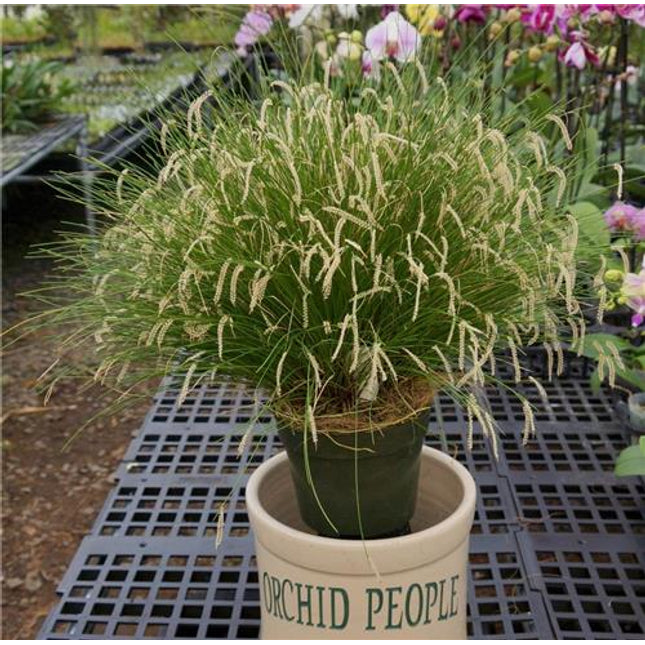
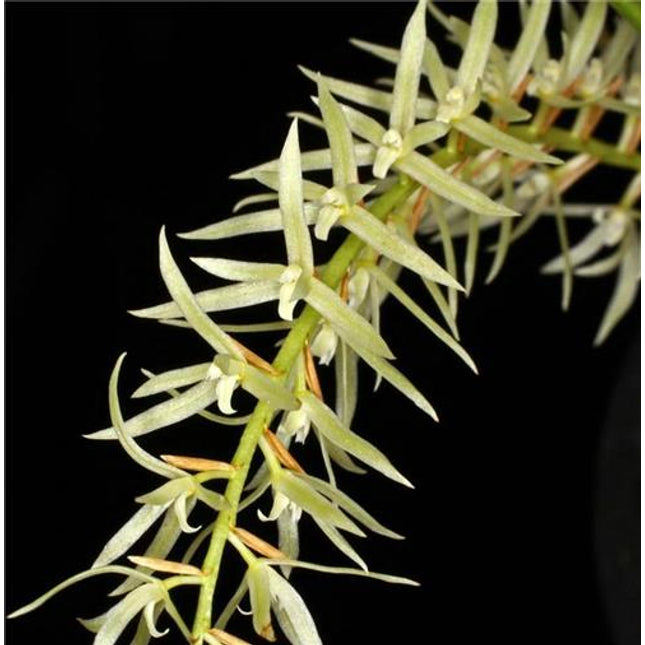
Blooming size plant in a 3.25" pot.
These plants are often called Grass Orchids (because of the leaves) or Fox Tail Orchids (because of the inflorescence). I like these tiny plants for a number of reasons. They are easy to grow and get large, for a miniature, fast. A specimen-size plant fits easily in a 3.25" pot. Our specimen-size plant produces hundreds of tiny arching inflorescences in flower at the same time! That's thousands of tiny flowers open at the same time!
Care tip: These plants should never dry out completely.
This is one of the bigger-flowered Dendrochilum species. Each long, gracefully arching inflorescence produce up to 30 flowers each. This plant is quite a site when it reaches even close to specimen size when blooming! Generally blooms late winter-spring.
Care: intermediate-warm temps, bright indirect light, and plenty of water year-round.
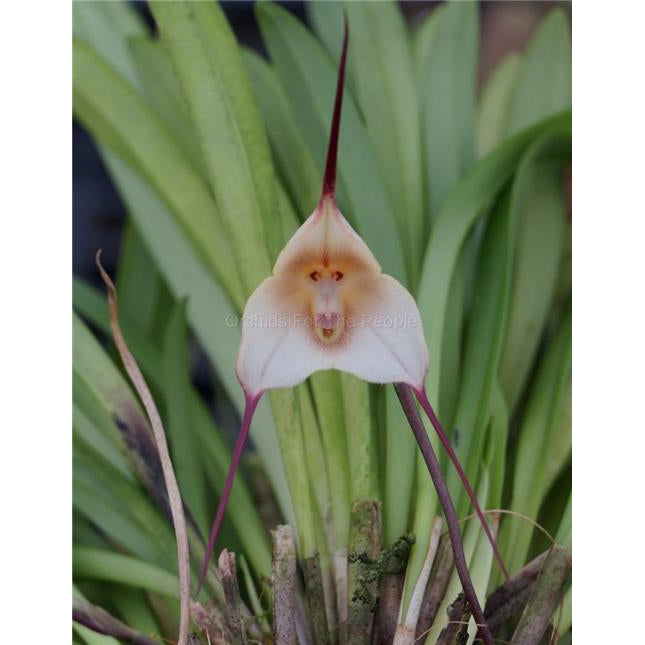
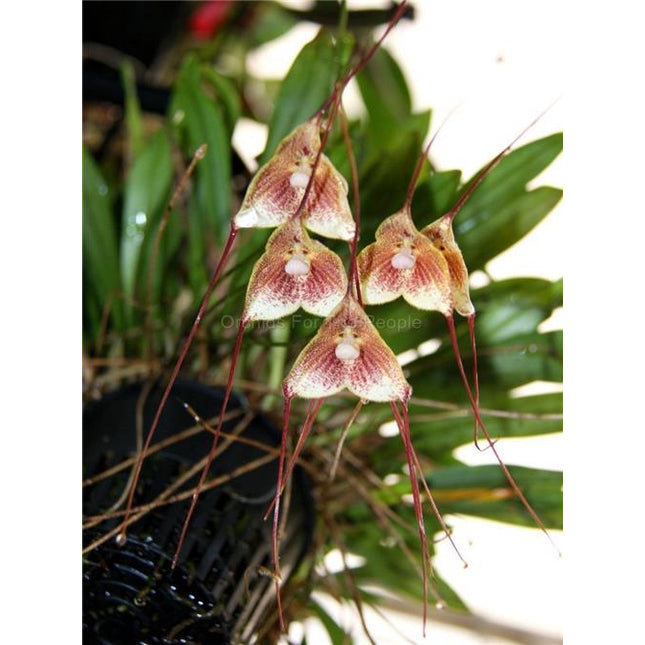
Blooming size plant in a 3" net pot. This species produces flowers that truly have a monkey face (I actually see baboon)! Most Dracula species have more cryptic color patterns, but not this one! The white flowers with red tepals really stand out. The main body of the flower is 1.5" and the overall length is 4.5". Not only that, each flower spike will produce 2-5 flowers in succession over a period of a couple of months. The 4" flower spikes will emerge from around the margin of the plant as well as out of the sides and bottom of the basket and the flowers face down. Must be hung because of the flowering habit.These plants are wonderful to own if you can give them what they want.
Care: Cool, moist, and shady is the mantra for Draculas. We give our plants lots of light in the winter and lots of shade in the summer.
The nice thing about this group is if you can grow one Drac, you can pretty much grow them all. Like their cousins the Masdevallias, when these plants are happy, they grow like weeds and are prolific flowerers.
Blooming size plant in a 3" net pot.
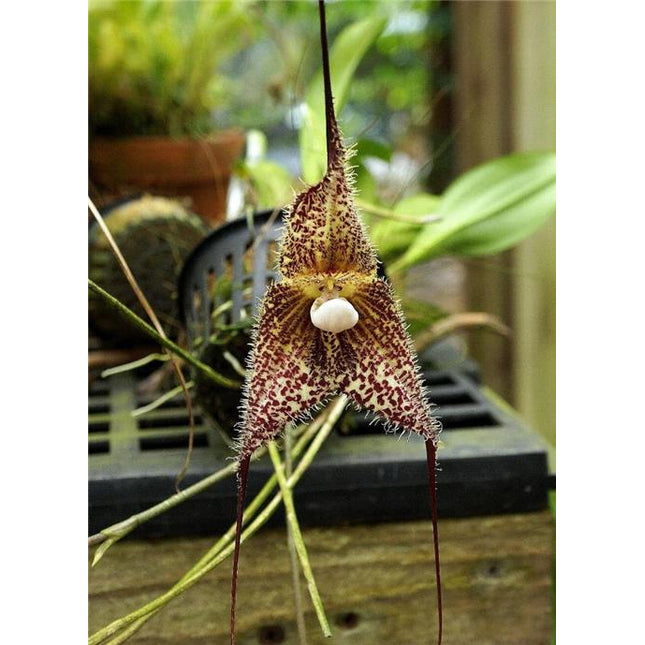
This is one of the biggest flowers in the genus Dracula. From top tip to bottom tip these flowers regularly reach 7"! The creamy white sepals are covered with red markings. Hairs cover the sepals but are especially prominent around the margin of the flower. To top it off, the hinged lip is huge and curves up around the edge to form a pouch. Each flower spike will produce 2-6 flowers in succession over a period of a couple of months. Flowers late summer-winter.
The 16" flower spikes will emerge from around the margin of the plant as well as out of the sides and bottom of the basket and the flowers face down. Must be hung because of the flowering habit.
These plants are wonderful to own if you can give them what they want.
Care: Cool, moist, and shady is the mantra for Draculas. We give our plants lots of light in the winter and lots of shade in the summer.
The nice thing about this group is if you can grow one Drac, you can pretty much grow them all. Like their cousins the Masdevallias, when these plants are happy, they grow like weeds and are prolific flowerers.
Near-blooming size division in a 3" net pot.
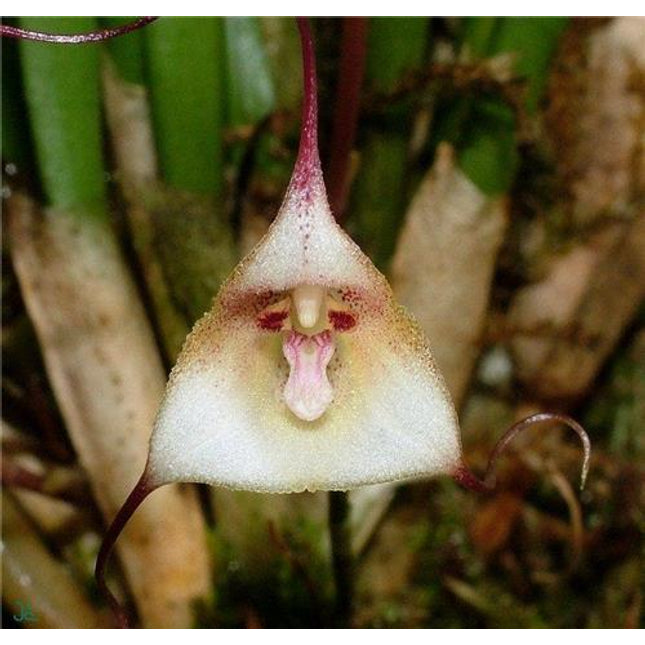
This species produces flowers that truly have a monkey face (I actually see baboon)! This species produces flowers with white sepals with red stripes that radiate from the center and a red dot on its "forehead". The main body of the flower is 1.5" and the overall length is 4". Not only that, each flower spike will produce 2-5 flowers in succession over a period of a couple of months. The 4" flower spikes will emerge from around the margin of the plant as well as out of the sides and bottom of the basket and the flowers face down. Must be hung because of the flowering habit.Flowers (for us) late summer-winter. These plants are wonderful to own if you can give them what they want. Dracula culture is simple; cool, moist, and shady. Minimum low temp of 46°F and a high of around 85°. Anything over 80°, keep the plant really wet. We like to water them morning and evening at least a couple of times a week in the summer. Folks with greenhouses that have swamp coolers grow them directly in front of the cooler. We give our plants lots of light in the winter and lots of shade in the summer. The nice thing about this group is if you can grow one Drac you can pretty much grow them all. Like their cousins the Masdevallias, when these plants are happy they grow like weeds and are prolific flowerers.
Blooming size plant in a 3" net pot.
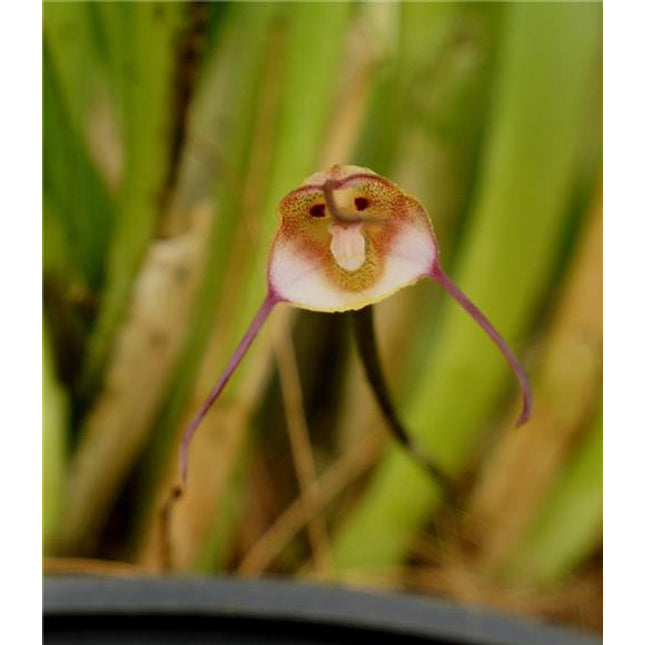
This species produces small (about the size of a nickel) flowers that truly have a monkey face! Flowers in the summer for us. The short flower spikes emerge around the margin of the plant. The flowers tend to open all at the same time so it looks like a whole pack of monkeys (albeit tiny monkeys!) staring at you! Best if hung up in a basket but this is one of the few Dracula species that can be grown in a pot on a table.
Picture of plant not in bud representative of plant for sale.
Care: Minimum low temp of 46° F and a high of around 85°F. Anything over 80°, keep the plant really wet. We like to water them morning and evening at least a couple of times a week in the summer. Folks with greenhouses that have swamp coolers grow them directly in front of the cooler. We give our plants lots of light in the winter and lots of shade in the summer.
Dracula houtteana in a 3" net pot.
Most flower spikes produce 4-7 flowers sequentially. The flowers are medium-sized, 2" from tip to tail. The fungus-like lip is hinged and moves in the slightest breeze. Care: cool, moist, and shady. Minimum low temp of 46° F and a high of around 85°. Anything over 80°, keep the plant really wet. We give our draculas lots of light in the winter and lots of shade in the summer.
The nice thing about this group is if you can grow one Drac you can pretty much grow them all. Like their cousins the Masdevallias, when these plants are happy they grow like weeds and are prolific flowerers.
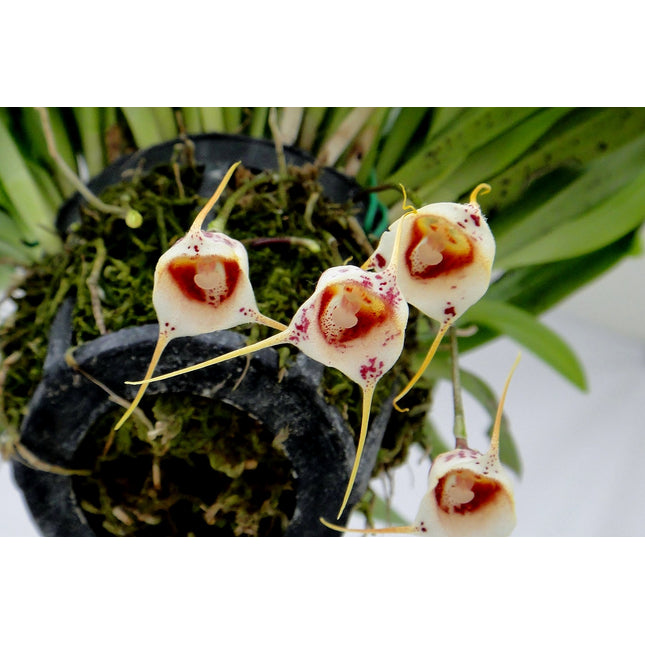
Blooming size plant in a 3" net pot. Beautiful, small (1") white, bell-shaped flowers with random purple markings and a fungus-like lip that is hinged and moves in the slightest breeze. Each flower spike produces 1-3 flowers in succession over 4-8 weeks. And, of course, the monkey-like face made up of the lip and column!
With very few exceptions, these plants flower out of the side or bottom of the basket. Regardless of how the spike emerges, we grow all the plants of this genus in net pots.
These plants are wonderful to own if you can give them what they want. Care: Cool, moist, and shady is the mantra for Draculas. We give our plants lots of light in the winter and lots of shade in the summer.
The nice thing about this group is if you can grow one Drac, you can pretty much grow them all. Like their cousins the Masdevallias, when these plants are happy they grow like weeds and are prolific flowerers.
Please note that plant may not currently be in spike or flower when shipped.
This species produces very small (about the size of a dime) flowers that truly have a monkey face! Flowers late winter for us and a plant the size of the one in this listing can produce 20-40 flower spikes all at once. Not only that, each flower spike will produce 2-5 flowers in succession over a period of a couple of months. The short flower spikes emerge around the margin of the plant and the flowers face down. When seen from below it looks like a pack of mini monkeys staring down at you! Best if hung up in a basket but this is one of the few Dracula species that can be grown in a pot on a table.These plants are wonderful to own if you can give them what they want.
Care: Minimum low temp of 46° F and a high of around 85°. Anything over 80°, keep the plant really wet. We like to water them morning and evening at least a couple of times a week in the summer. Folks with greenhouses that have swamp coolers grow them directly in front of the cooler. We give our plants lots of light in the winter and lots of shade in the summer.
Well-established blooming size plant in a 3" net pot.
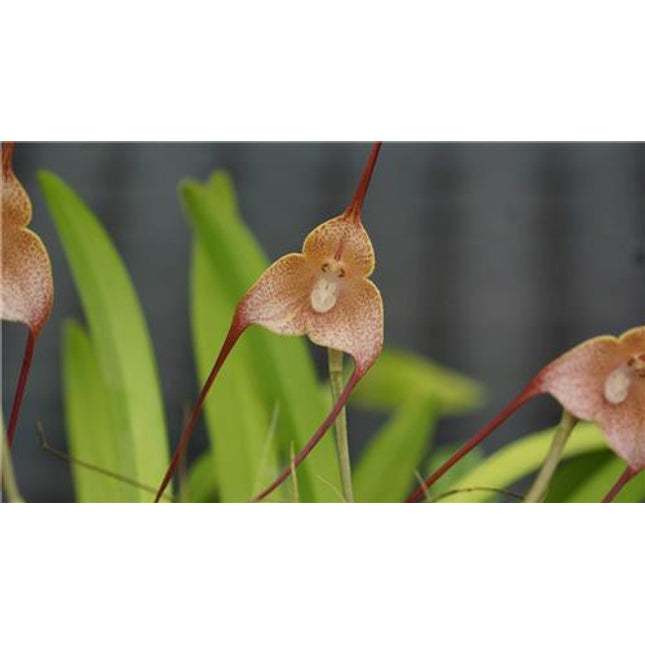
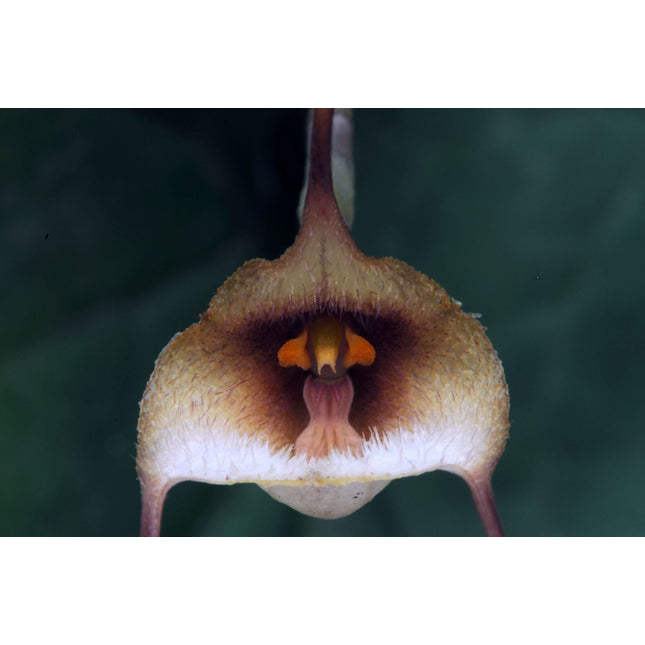
Beautiful honey tones, the hairs completely cover the flower, giving it a pearlescent effect. The fungus-like lip is hinged and moves in the slightest breeze. With very few exceptions, species in the genus Dracula produce pendant flower spikes, and we grow all the plants of this genus in hanging net pots.
Care: cool, moist, and shady. Minimum low temp of 46° F and a high of around 85°. Anything over 80°, keep the plant really wet. We give our draculas lots of light in the winter and lots of shade in the summer.
The nice thing about this group is if you can grow one Drac you can pretty much grow them all. Like their cousins the Masdevallias, when these plants are happy they grow like weeds and are prolific flowerers.
Well-established blooming size plant in a 2.25" pot. A plant this size will typically produce 20-30 flowers when it blooms. Very limited quantities!
A small, fast-growing plant that flowers repeatedly late fall-spring. Great for terrariums, vivariums, small grow spaces, and anyone who loves minis!
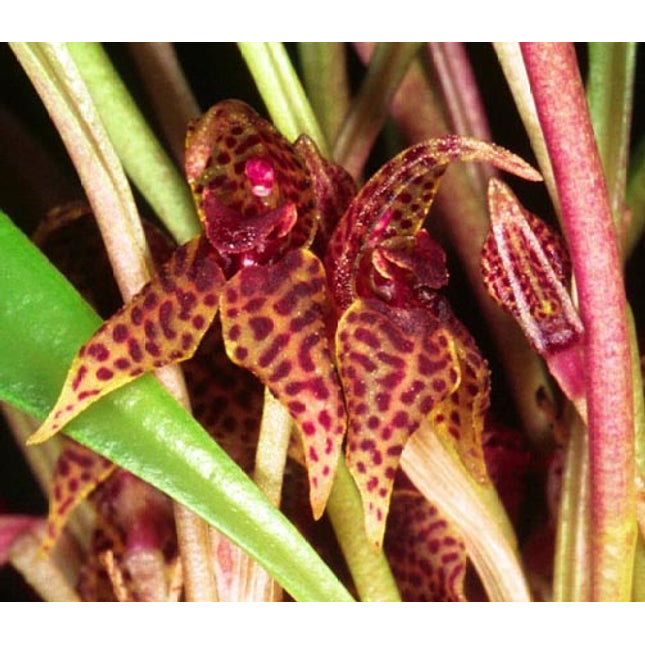
This is a lovely miniature species! Tiny Masdevallia-like flowers that have a light green background with red spots. Rarely seen for sale and is a great addition to any Pleurothallid or cool climate collection.
Care: Best kept on the cool side (but doesn't mind intermediate temps) and moist.
5 plugs for $27.50
In-house hybrid
Seed grown (there will be flower variations from plant to plant)
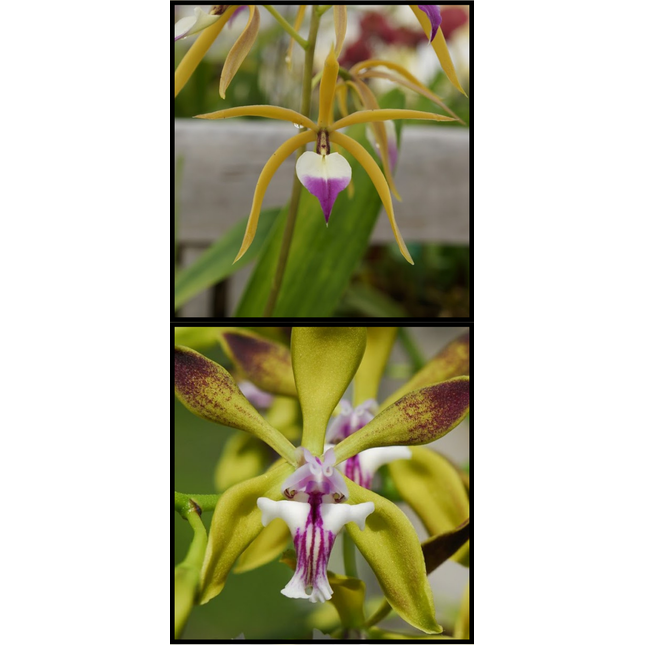
Parent plants pictured
Seedling in Plug, 6-9 months out of flask as of February 2025