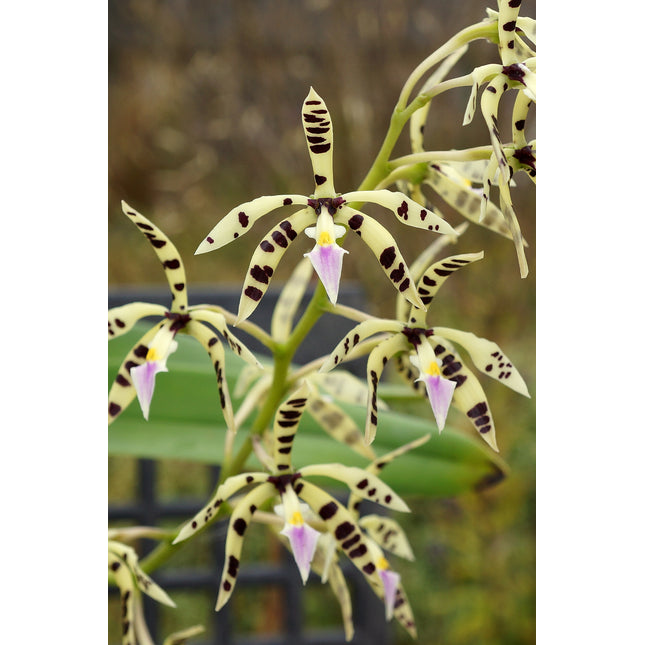
Blooming size plant in a 3" net pot.
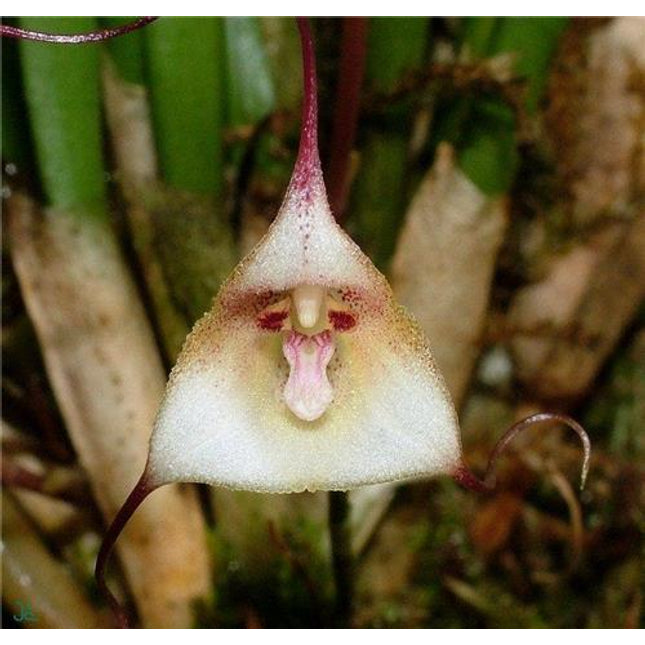
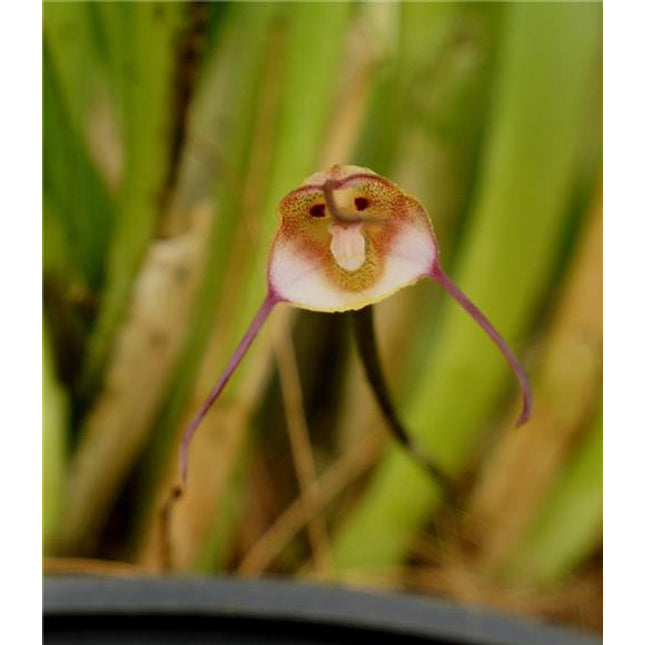
This species produces small (about the size of a nickel) flowers that truly have a monkey face! Flowers in the summer for us. The short flower spikes emerge around the margin of the plant. The flowers tend to open all at the same time so it looks like a whole pack of monkeys (albeit tiny monkeys!) staring at you! Best if hung up in a basket but this is one of the few Dracula species that can be grown in a pot on a table.
Picture of plant not in bud representative of plant for sale.
Care: Minimum low temp of 46° F and a high of around 85°F. Anything over 80°, keep the plant really wet. We like to water them morning and evening at least a couple of times a week in the summer. Folks with greenhouses that have swamp coolers grow them directly in front of the cooler. We give our plants lots of light in the winter and lots of shade in the summer.
Dracula houtteana in a 3" net pot.
Most flower spikes produce 4-7 flowers sequentially. The flowers are medium-sized, 2" from tip to tail. The fungus-like lip is hinged and moves in the slightest breeze. Care: cool, moist, and shady. Minimum low temp of 46° F and a high of around 85°. Anything over 80°, keep the plant really wet. We give our draculas lots of light in the winter and lots of shade in the summer.
The nice thing about this group is if you can grow one Drac you can pretty much grow them all. Like their cousins the Masdevallias, when these plants are happy they grow like weeds and are prolific flowerers.
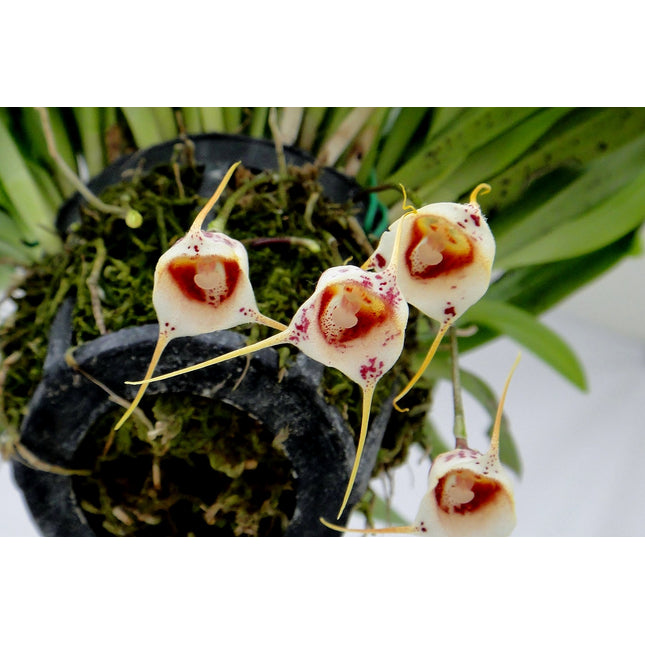
Blooming size plant in a 3" net pot. Beautiful, small (1") white, bell-shaped flowers with random purple markings and a fungus-like lip that is hinged and moves in the slightest breeze. Each flower spike produces 1-3 flowers in succession over 4-8 weeks. And, of course, the monkey-like face made up of the lip and column!
With very few exceptions, these plants flower out of the side or bottom of the basket. Regardless of how the spike emerges, we grow all the plants of this genus in net pots.
These plants are wonderful to own if you can give them what they want. Care: Cool, moist, and shady is the mantra for Draculas. We give our plants lots of light in the winter and lots of shade in the summer.
The nice thing about this group is if you can grow one Drac, you can pretty much grow them all. Like their cousins the Masdevallias, when these plants are happy they grow like weeds and are prolific flowerers.
Dracula Jake Sprankle (Dracula bellerphon x vampira). Well-established blooming size plant in a 3" net pot.
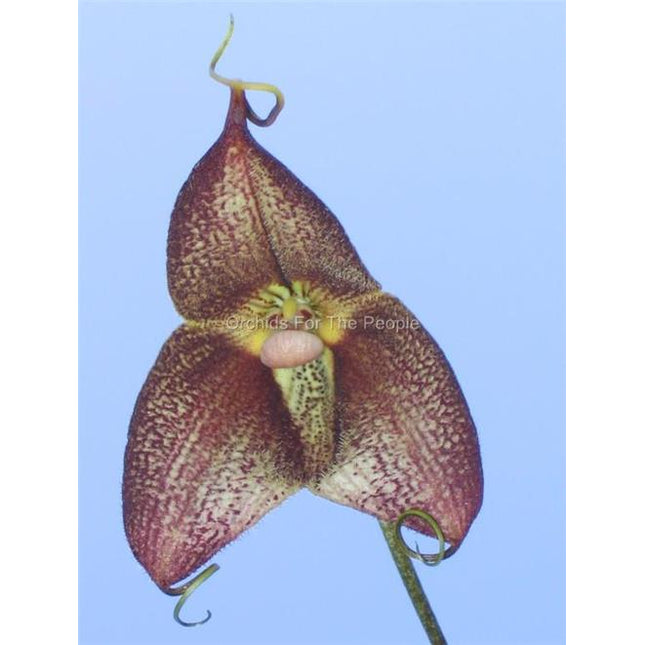
These plants are from seed so color and shape range the full spectrum between vampira and bellerphon! I added several pictures of various plants to give you a sense of what the flowers will look like. The fungus-like lip is hinged and moves in the slightest breeze. I particularly like the ones with corkscrew pigtails! Sorry, we cannot pick out particular flower characteristics for individual buyers.
Care: cool, moist, and shady. Minimum low temp of 46° F and a high of around 85°. Anything over 80°, keep the plant really wet. We give our Draculas lots of light in the winter and lots of shade in the summer.
The nice thing about this group is if you can grow one Drac you can pretty much grow them all. Like their cousins the Masdevallias, when these plants are happy they grow like weeds and are prolific flowerers.
Please note that plant may not currently be in spike or flower when shipped.
This species produces very small (about the size of a dime) flowers that truly have a monkey face! Flowers late winter for us and a plant the size of the one in this listing can produce 20-40 flower spikes all at once. Not only that, each flower spike will produce 2-5 flowers in succession over a period of a couple of months. The short flower spikes emerge around the margin of the plant and the flowers face down. When seen from below it looks like a pack of mini monkeys staring down at you! Best if hung up in a basket but this is one of the few Dracula species that can be grown in a pot on a table.These plants are wonderful to own if you can give them what they want.
Care: Minimum low temp of 46° F and a high of around 85°. Anything over 80°, keep the plant really wet. We like to water them morning and evening at least a couple of times a week in the summer. Folks with greenhouses that have swamp coolers grow them directly in front of the cooler. We give our plants lots of light in the winter and lots of shade in the summer.
Well-established blooming size plant in a 3" net pot.
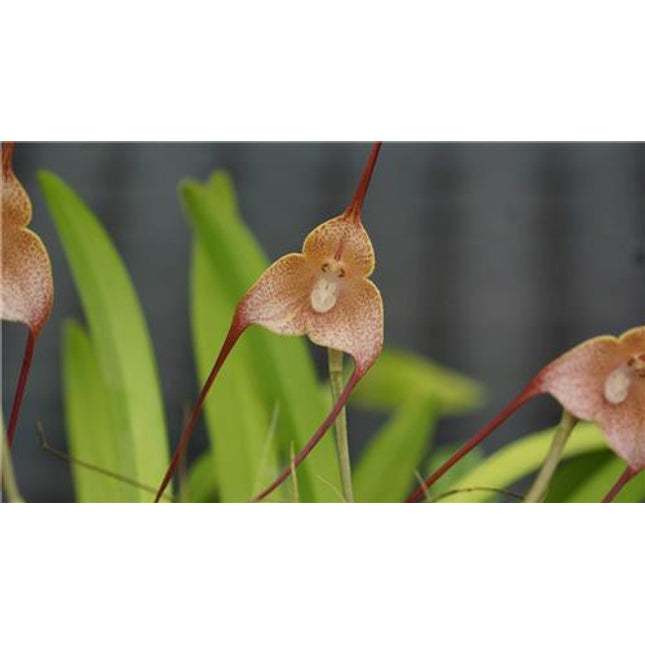
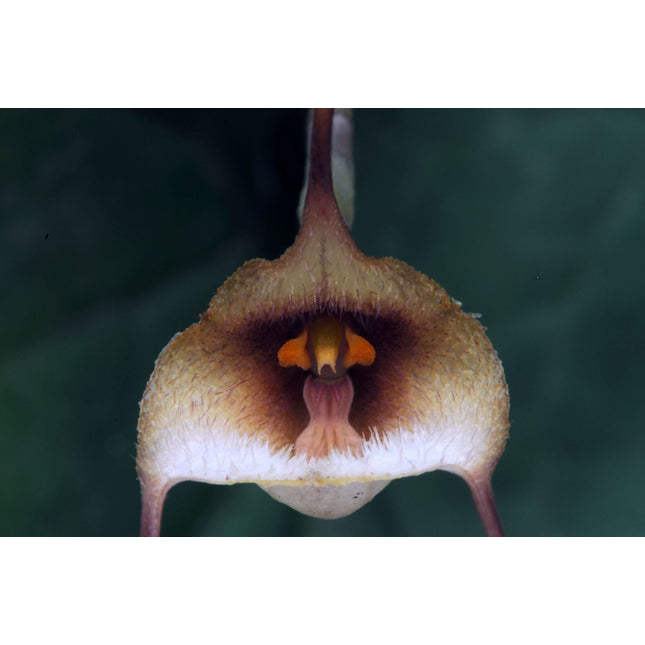
Beautiful honey tones, the hairs completely cover the flower, giving it a pearlescent effect. The fungus-like lip is hinged and moves in the slightest breeze. With very few exceptions, species in the genus Dracula produce pendant flower spikes, and we grow all the plants of this genus in hanging net pots.
Care: cool, moist, and shady. Minimum low temp of 46° F and a high of around 85°. Anything over 80°, keep the plant really wet. We give our draculas lots of light in the winter and lots of shade in the summer.
The nice thing about this group is if you can grow one Drac you can pretty much grow them all. Like their cousins the Masdevallias, when these plants are happy they grow like weeds and are prolific flowerers.
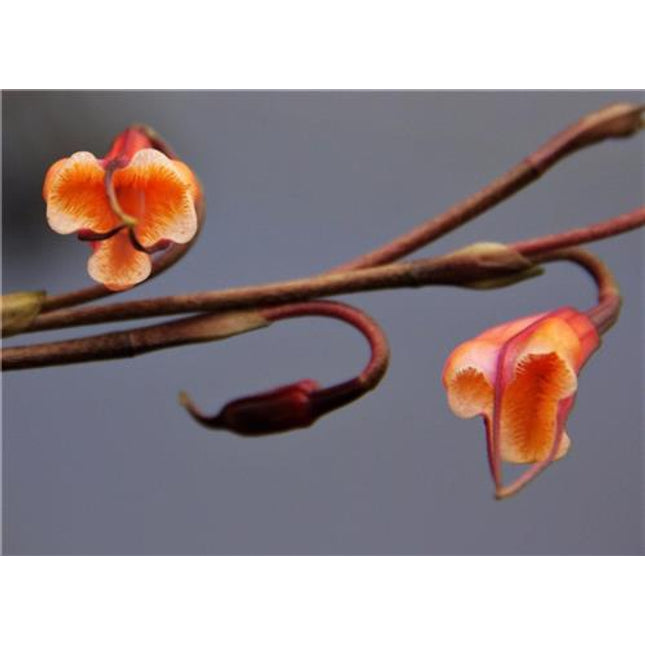
Well-established blooming size plant in a 2.25" pot. This is a unique and interesting Dracula. The first thing that stands out is the fact that it sends flower spikes up, not straight down, which is rare for this genus. The second thing you notice is the flower itself. The flower hangs down from the spike and the sepals are fused into a lantern-like shape. This, along with the bright orange color, draws a person in for a closer look. Then you notice the inside of the flower is completely covered in fuzzy hair! All in all, a neat addition to any cool to intermediate collection.Dracula sodiroi is also easier to grow than most Draculas because, since the flower spike grow upwards, you can grow it in a pot rather than a basket. This makes it easier to keep moist which, along with high humidity and good air movement, is essential for keeping this entire genus happy and healthy.
Well-established blooming size plant in a 2.25" pot. A plant this size will typically produce 20-30 flowers when it blooms. Very limited quantities!
A small, fast-growing plant that flowers repeatedly late fall-spring. Great for terrariums, vivariums, small grow spaces, and anyone who loves minis!
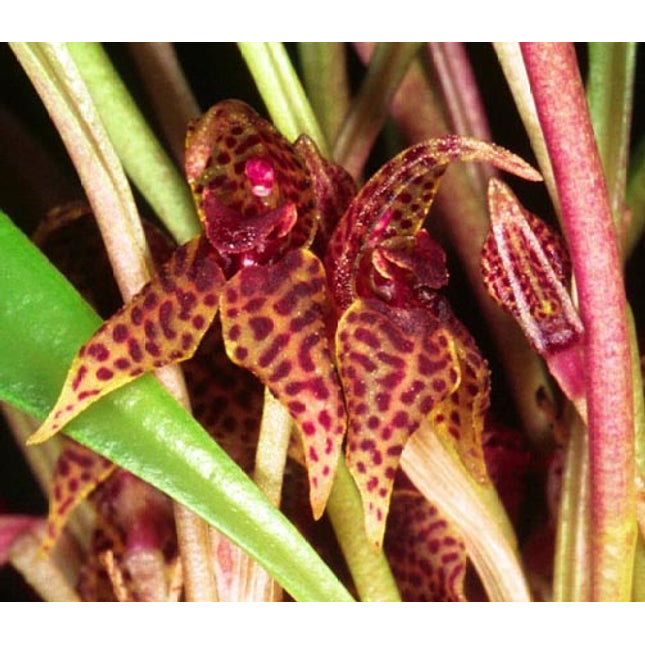
This is a lovely miniature species! Tiny Masdevallia-like flowers that have a light green background with red spots. Rarely seen for sale and is a great addition to any Pleurothallid or cool climate collection.
Care: Best kept on the cool side (but doesn't mind intermediate temps) and moist.
Well-established 2-3 pseudobulb division in 3.25" pot with at least one new growth since repotting (for a total of at least 3 pseudobulbs).
I think this is one of the most beautiful flowers in the Encyclia "alliance". Flowers are a little over 2" across. Lightly fragrant. This species flowers spring through fall, whenever new pseudobulbs mature. Blooms late spring-early summer.
Care: Intermediate-warm temps and bright indirect light. Regular watering and fertilizer spring-fall and dry periods and between light waterings with no fertilizer in the winter.
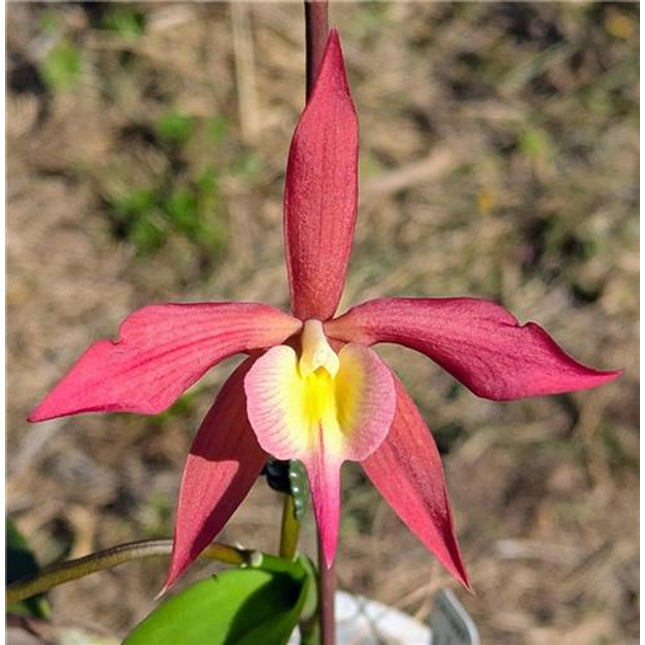
Our newest hybrid! Epicattleya Redwood Sunset (Cattleya sophronitis x Epidendrum parkinsonianum). Well-established, near-blooming seedlings in 4" net pots. These plants should bloom in the next 12-18 months if they are kept happy.When hybridizing, it's rare that the resulting plant and flowers turn out the way you imagine them. Epc Redwood Sunset is exactly what we hoped for! The plant itself looks like a smaller version of Epi parkinsonianum with beautiful long (12+"), fleshy, lance-shaped, pendant blue-green leaves.The flowers have are slightly smaller than Epidendrum parkinsonianum but retain the same shape. But the color? It definitely comes from the Cattleya (Sophronitis) coccinea mom! All of the seedlings that have bloomed so far have produced orangey red flowers. Because these are seedlings and not clones, all the plants produce slightly different flowers. The biggest variable has been in the color, which ranges from orange-red to deep red. All of the plants have produced 2 flowers per spike. and they flower anytime a leaf matures, which can happen multiple times a year.These are durable plants! It needs to hung in a basket or mounted because of its pendant growth habit. They do not like to be repotted or divided and the roots like to hang in the air, similar to a Vanda.Care: Prefers cool-intermediate temps and bright indirect light. Regular watering and light feeding year-round, with a short dry period in between waterings.
Well-established blooming size plant in a 3.25" pot.
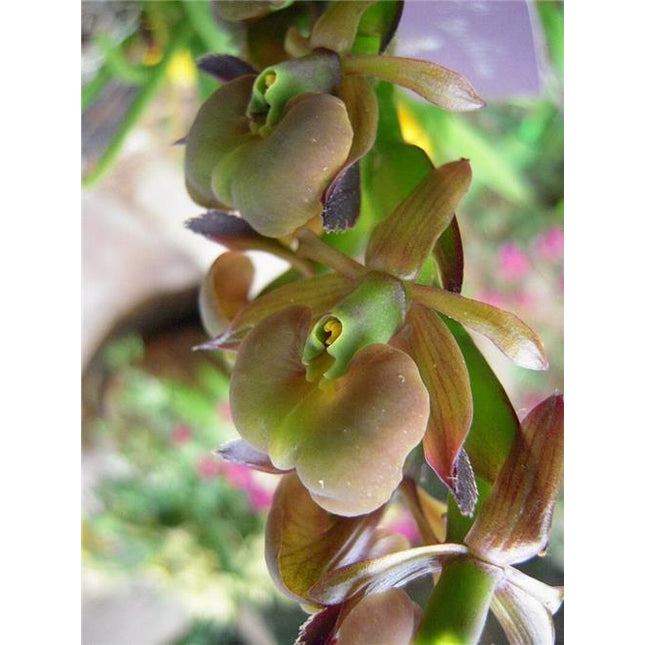
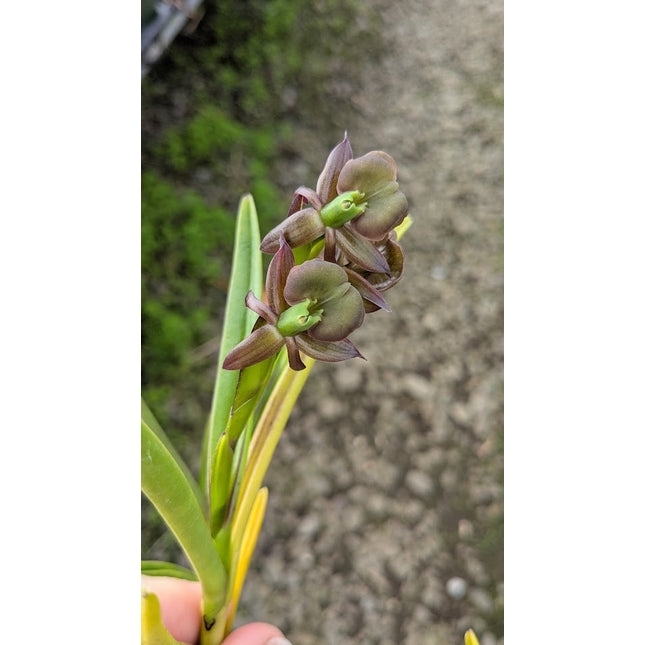
This stout, medium-sized species produces 5-12 green quarter-sized flowers on a 12"-15" spike. The flowers have an odd smell, but you need to get close to smell it. Flowers in the winter.Care: Bright indirect light, cool-hot temps, and regular year-round watering and light feeding.Flower picture credit: Elena Gaillard
Well-established blooming size seedlings in 3.25" pots. This is an in-house hybrid and is available exclusively from Orchids For The People. First blooms for this cross came in early 2025. The plant looks like a reed stem epidendrum but with very fleshy, almost succulent leaves. Growing conditions: intermediate-warm temps, bright indirect light, regular watering, and light feeding throughout the growing season (spring-fall) with a slightly dry rest period in the winter.