We've done the chore of deflasking, all you have to do is pot them up! Well-established seedlings. This is a complete flask (30+ plants) that was compotted in the March 2025.
Great for retailers or orchid societies!
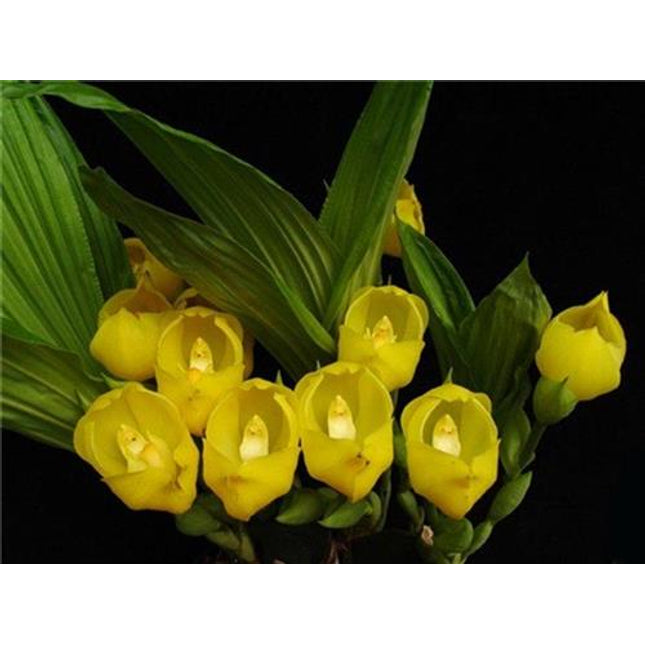
Anguloa dubia orchid is famous for its fragrant, tulip-like flowers (akin to wintergreen and Campho Phenique). This deciduous species produces new growths spring-fall. 2 or more flowers emerge from the base of each new growth. Flowers last 6-8 weeks.Care: Regular watering and light feeding spring-fall with a dry winter rest. Bright indirect light and cool-warm temps.
We've done the chore of deflasking, all you have to do is pot them up! Well-established seedlings. This is a complete flask (30+ plants) that was compotted in the March 2025.
Great for retailers or orchid societies!
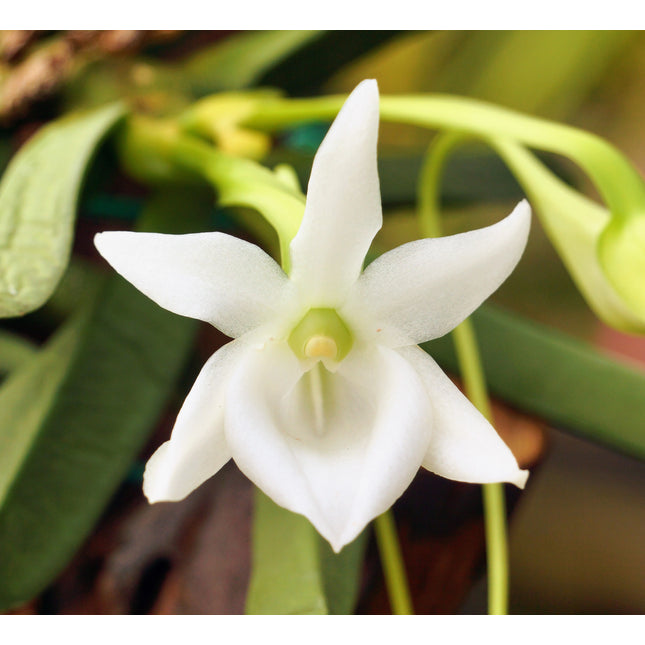
Angraecum compactum flowers are fragrant--spicy to citrusy smelling!Care: Prefers cool-warm temps and bright indirect light. Water promptly once the media has dried.
Blooming size plants in 3.25" pots.
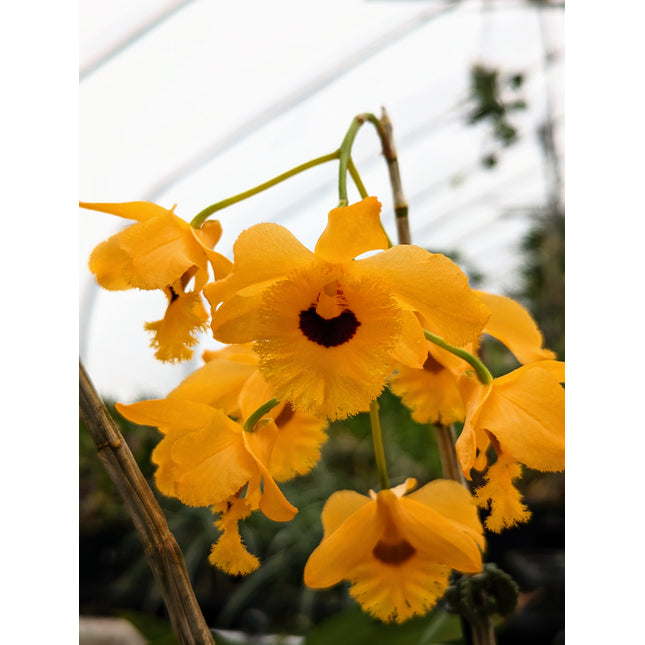
Very similar to D fimbriatum, having dark yellow/orange (almost gold) flowers with a heavily fringed lip, but the plant and flowers are a little larger and the lip of the flower has 2 smaller separate or 1 large dark brown to black eyespot(s). Flowers on leafless and mature canes starting in the spring and continues to flower through the fall at random.
Care: Easy to grow. Prefers cool-warm temps, bright indirect light, and lots of water in the summer and infrequent, light watering in the winter.
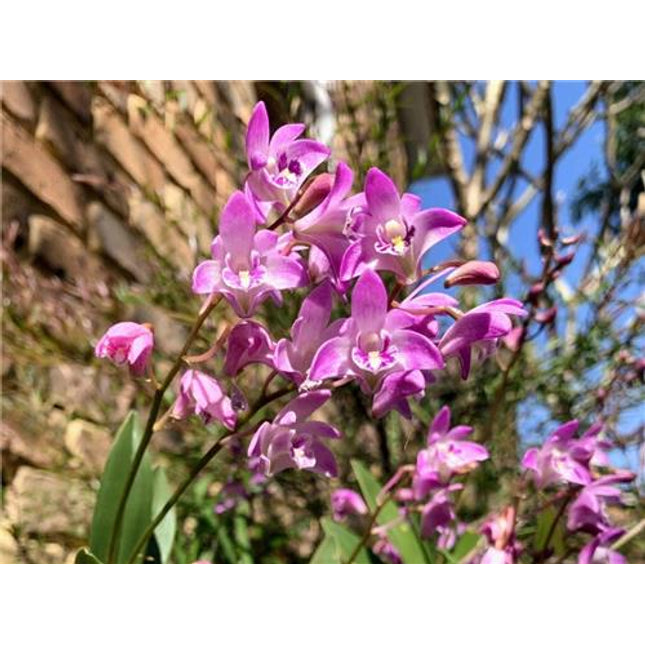
Well-established blooming size plant in a 3.25" pot.This is one of the first orchids I grew as a kid in southern CA and is still one of the hardiest and most forgiving orchids you can grow! D kingianum stays very compact and is happy pretty much anywhere that receives moderately bright light.This species flowers late winter/early spring and produces an abundance of fragrant, long-lasting, dime-sized purple and white flowers.If you want to try your hand at orchids, start here!Care: Bright indirect light, moist and warm-hot in the summer, cool and drier in the winter. Light, regular fertilizing spring-late summer
Dendrobium Rainbow Dance (D Kurenai x D unicum). Small, well-established blooming size plant in a 3.25" pot.Sturdy, fast-growing, and showy, this plant puts on a real show from February to April with a huge flush of 1.5" purple and white flowers. The lip is white with a little purple blush and vivid purple veins. Flowers last 6-8 weeks!This is a great plant for beginners and veterans alike.Care: Bright indirect light year round. Regular watering and light feeding and intermediate-warm temps spring-fall and a cool, drier rest period in the winter.
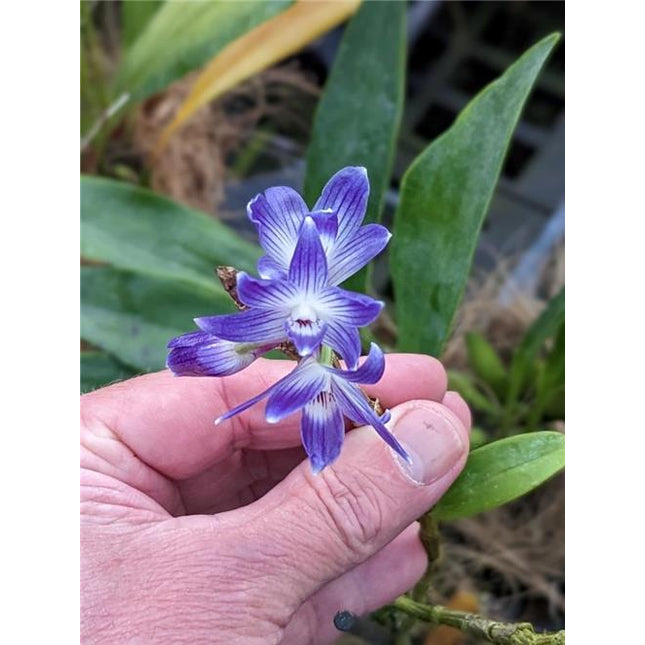
Den victoriae-reginae is known for its beautiful violet-blue flowers. It tends to produce darker (more blue) flowers in cooler temps. Blue color flowers are very rare among orchids.
Den victoriae-reginae blooms most often in the spring-summer but can bloom anytime.
2 sizes available: Blooming size 3" net pot and Near Blooming Size 2" pot.
Care: Cool-warm temps. Regular year-round watering and light feeding with a little more drying out between waterings in the winter. Bright indirect light.
Well-established blooming size plant in a 3.25" pot.
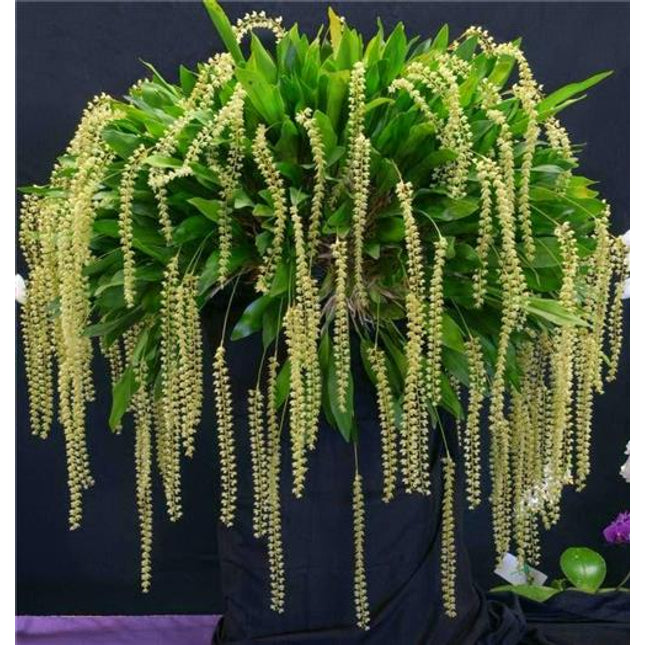
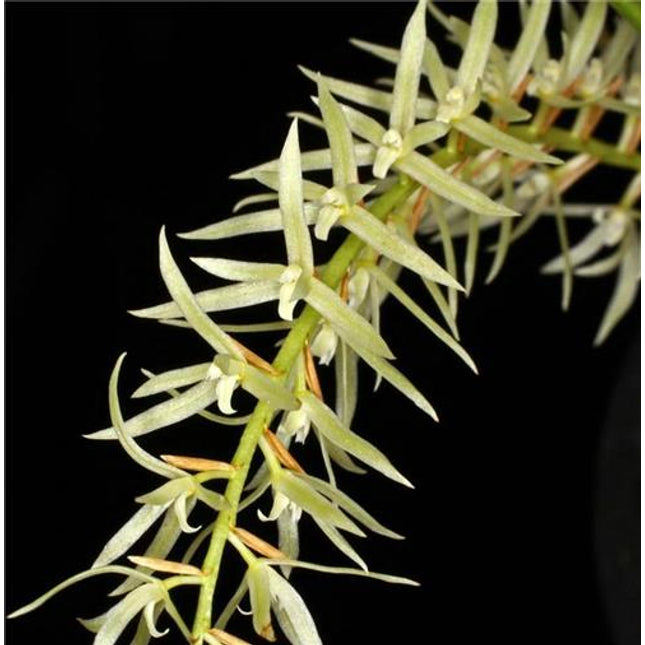
One of the bigger Dendrochilums, the flower inflorescence can be almost 2 feet long with over a hundred small, fragrant yellow flowers.Care: Intermediate to warm temps, partial shade, regular watering and light feeding year round.
This is one of the bigger-flowered Dendrochilum species. Each long, gracefully arching inflorescence produce up to 30 flowers each. This plant is quite a site when it reaches even close to specimen size when blooming! Generally blooms late winter-spring.
Care: intermediate-warm temps, bright indirect light, and plenty of water year-round.
Blooming size division in a 3" net pot.
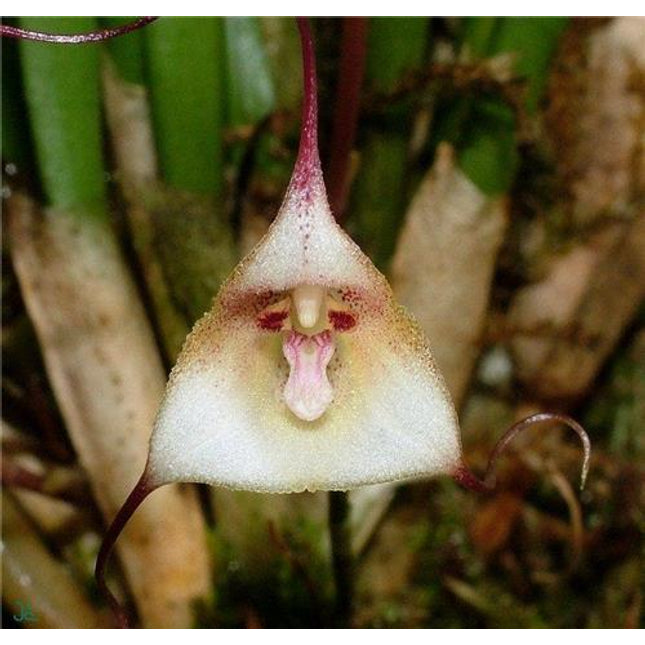
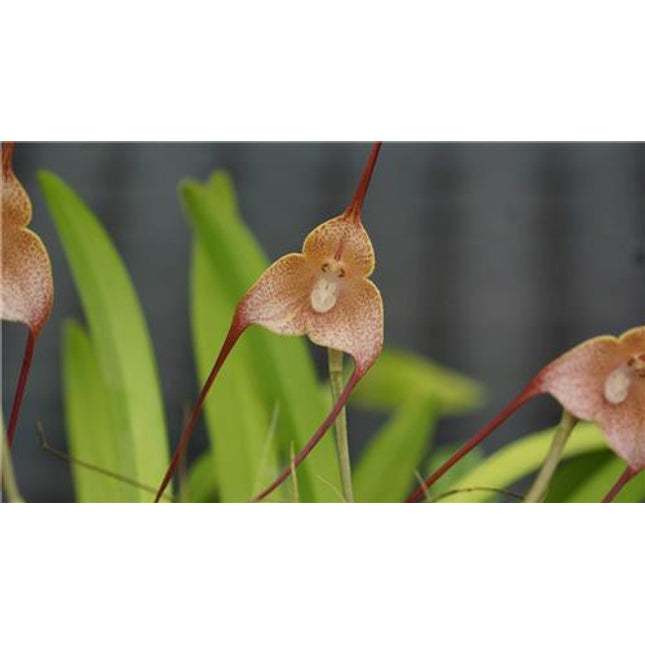
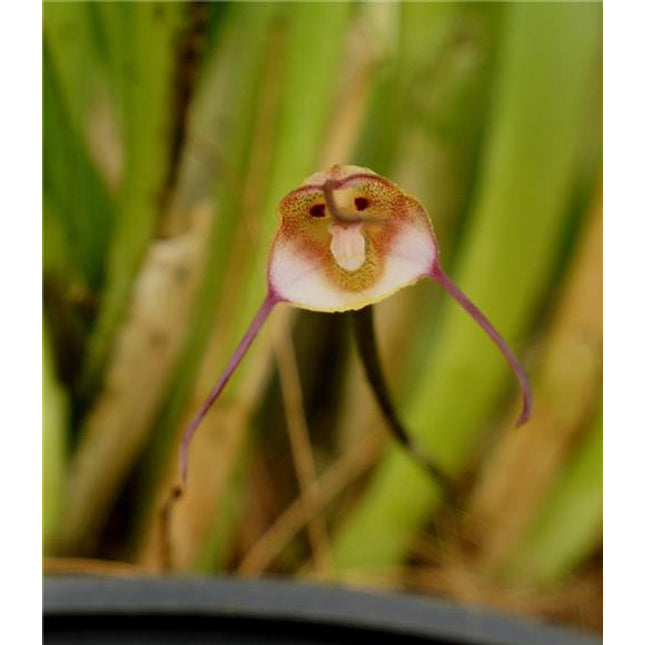
This species produces flowers that truly have a monkey face (I actually see baboon)! This species produces flowers with white sepals with red stripes that radiate from the center and a red dot on its "forehead". The main body of the flower is 1.5" and the overall length is 4". Not only that, each flower spike will produce 2-5 flowers in succession over a period of a couple of months. The 4" flower spikes will emerge from around the margin of the plant as well as out of the sides and bottom of the basket and the flowers face down. Must be hung because of the flowering habit.Flowers (for us) late summer-winter. These plants are wonderful to own if you can give them what they want. Dracula culture is simple; cool, moist, and shady. Minimum low temp of 46°F and a high of around 85°. Anything over 80°, keep the plant really wet. We like to water them morning and evening at least a couple of times a week in the summer. Folks with greenhouses that have swamp coolers grow them directly in front of the cooler. We give our plants lots of light in the winter and lots of shade in the summer. The nice thing about this group is if you can grow one Drac you can pretty much grow them all. Like their cousins the Masdevallias, when these plants are happy they grow like weeds and are prolific flowerers.
Blooming size plant in a 3" net pot.
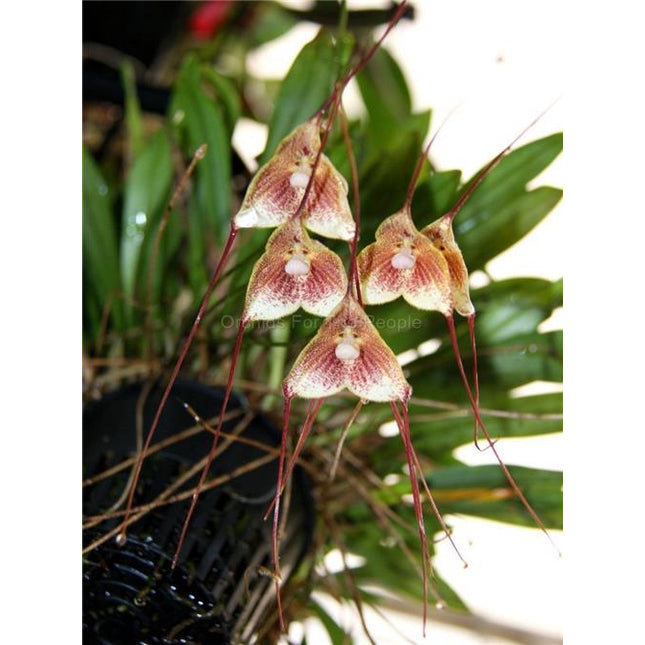
This species produces small (about the size of a nickel) flowers that truly have a monkey face! Flowers in the summer for us. The short flower spikes emerge around the margin of the plant. The flowers tend to open all at the same time so it looks like a whole pack of monkeys (albeit tiny monkeys!) staring at you! Best if hung up in a basket but this is one of the few Dracula species that can be grown in a pot on a table.
Picture of plant not in bud representative of plant for sale.
Care: Minimum low temp of 46° F and a high of around 85°F. Anything over 80°, keep the plant really wet. We like to water them morning and evening at least a couple of times a week in the summer. Folks with greenhouses that have swamp coolers grow them directly in front of the cooler. We give our plants lots of light in the winter and lots of shade in the summer.
Dracula houtteana in a 3" net pot.
Most flower spikes produce 4-7 flowers sequentially. The flowers are medium-sized, 2" from tip to tail. The fungus-like lip is hinged and moves in the slightest breeze. Care: cool, moist, and shady. Minimum low temp of 46° F and a high of around 85°. Anything over 80°, keep the plant really wet. We give our draculas lots of light in the winter and lots of shade in the summer.
The nice thing about this group is if you can grow one Drac you can pretty much grow them all. Like their cousins the Masdevallias, when these plants are happy they grow like weeds and are prolific flowerers.
Please note that plant may not currently be in spike or flower when shipped.
This species produces very small (about the size of a dime) flowers that truly have a monkey face! Flowers late winter for us and a plant the size of the one in this listing can produce 20-40 flower spikes all at once. Not only that, each flower spike will produce 2-5 flowers in succession over a period of a couple of months. The short flower spikes emerge around the margin of the plant and the flowers face down. When seen from below it looks like a pack of mini monkeys staring down at you! Best if hung up in a basket but this is one of the few Dracula species that can be grown in a pot on a table.These plants are wonderful to own if you can give them what they want.
Care: Minimum low temp of 46° F and a high of around 85°. Anything over 80°, keep the plant really wet. We like to water them morning and evening at least a couple of times a week in the summer. Folks with greenhouses that have swamp coolers grow them directly in front of the cooler. We give our plants lots of light in the winter and lots of shade in the summer.