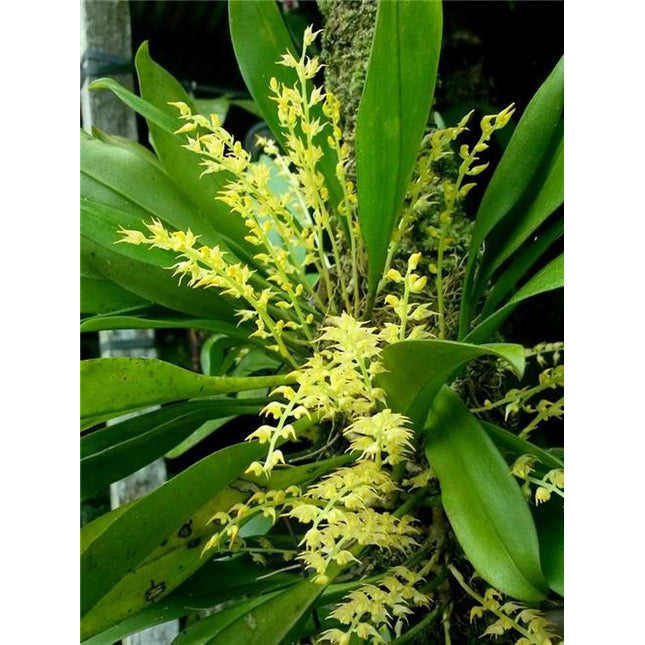
Well-established blooming size plant in a 3.25" pot. Limited quantity available!This is a large-leafed (16"+) bulbophyllum that stays very compact for its size. This species does equally well mounted, in hanging baskets, or in a pot. Flower spikes that are nearly 2' long and covered with up to 50 small, white, pleasantly-fragrant flowers (unlike most other Bulbophyllums). This species tends to flower all at once (in the spring for us) and puts on quite a show!Care: cool-warm temps, indirect light and regular year-round watering and light feeding.
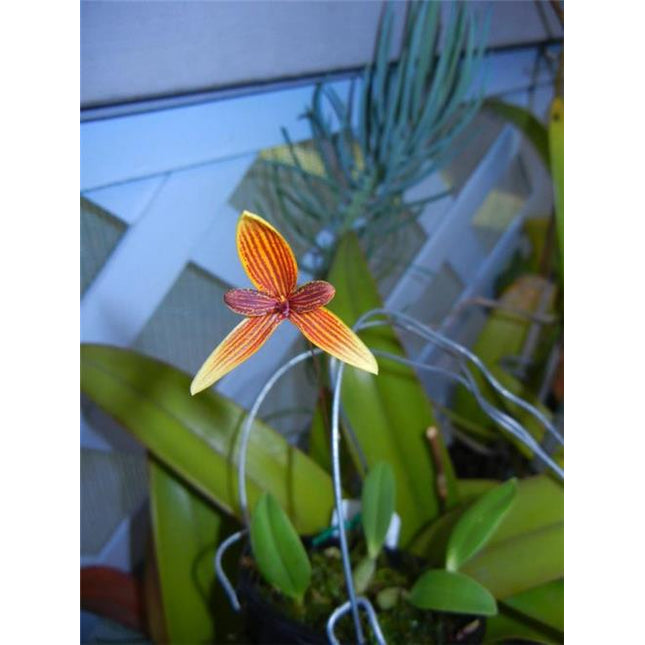
Well-established blooming size division in 3" clear net pot.Blooms randomly year round with single flowered inflorescence that bears a burnt orange flower with dark spots. Flowers are about the size of a quarter.
Care: Cool to intermediate temps, and likes shade to indirect sun. Regular year-round watering with light feeding.
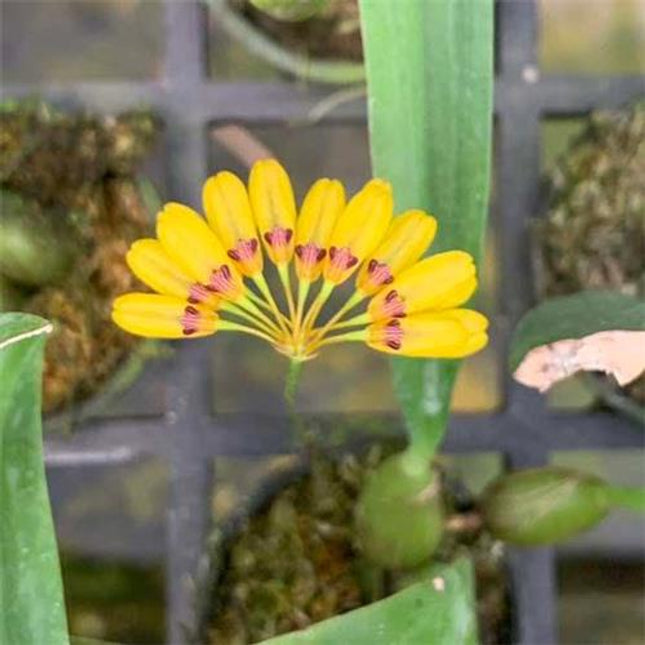
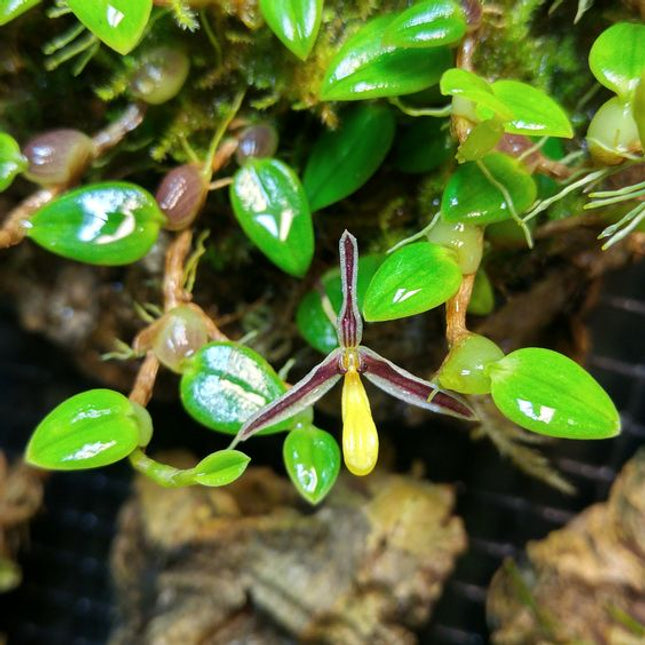
Blooming-size mounted plants. We imported these plants 6 months ago but held on to them to ensure the plants were healthy and strong (they are!). All plants being sold have new roots and shoots post-importation.Bulbophyllum skeatianum var Yellow is a great miniature species from Malaysia and Laos that produces yellow flowers that bloom summer through fall. These are vigorous growers and will grow great potted or mounted and can also be grown well in a terrarium or on a windowsill.Care: Intermediate-warm temps, bright indirect light, daily light misting, light fertilizer 2x/month when growing new roots or leaves.
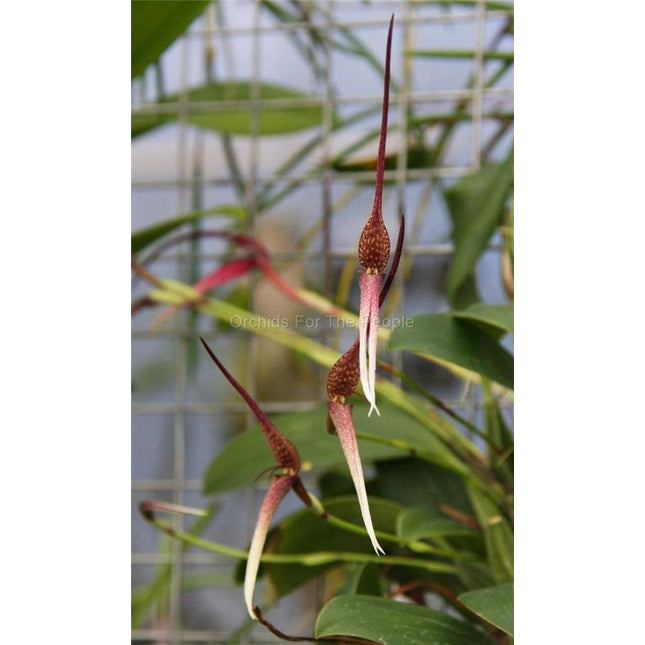
Well-established blooming size plant in a 3.25" pot. These plants are ready for mounting or hanging baskets (either is preferable to a pot for adult plants). The flowers of this species are unusual, even for a Bulbophyllum! Each flower is almost 3" long from top to bottom. The maroon background is darkest at the top and highlighted by yellow spots (it resembles snakeskin to me) and slowly fades to white on the bottom sepals. It's beautiful and weird at the same time! Flowers in the winter.Care: Prefers cool-intermediate temps, Indirect light, and moderate year-round food and water.
Well-established blooming size plant in a 3" net pot.Beautiful flowers are about a 1/2 inch across with mahogany petals that have a crystalline white margin. The lip is bright yellow. Flowers close for the night only to reopen the next morning! Stays very small and forms dense mats.Care: Moderate light, regular watering all year, and intermediate to warm temps.
In 3.25" pot.
Beautiful semi-peloric flowers! The lip and petals are purple and the sepals are green with purple spots. New growth has dark pigment spots which is indicative of spotted flowers. Fast growing and showing great hybrid vigor!Please note: These are blooming-size seed grown plants, not mericlone plants. Each plant will be unique. So far, all have followed a theme: semi-peloric with purple petals and lip, and green or white sepals with purple dots.Care: Bright indirect light, regular watering and light feeding spring-fall with a slight drying period in the winter.
This is a remake of Cattleya Antigone using 2 great, large-flowered parents. These plants are seed-grown seedlings, not mericlone plants, so each one is unique. If you like to get your plants judged, this is your chance to give a plant a clonal name! A real beauty!
4 sizes: Plug, 2" pot, BS 3.25" pot
Seedling in Plug, 6-9 months out of flask as of February 2025
Seedling in 2" pot, 1-2 years from blooming
Blooming size in 3.25" pot
In-house hybrid
Seed-grown (There will be variations in the flowers from plant to plant)
Care: Intermediate-warm temps and bright indirect light. Regular watering and fertilizer spring-fall and a slightly drier, fertilizer-free winter rest period.
5 plugs for $27.50 and/or 5 plants in 2" pot for $52.50
Seedling in Plug, 6-9 months out of flask as of February 2025
Seedling in 2" pot, 1-3 years from blooming
In-house hybrid
Seed-grown (There will be variations in the flowers from plant to plant)
Pictured is a flowering plant from the same seed pod
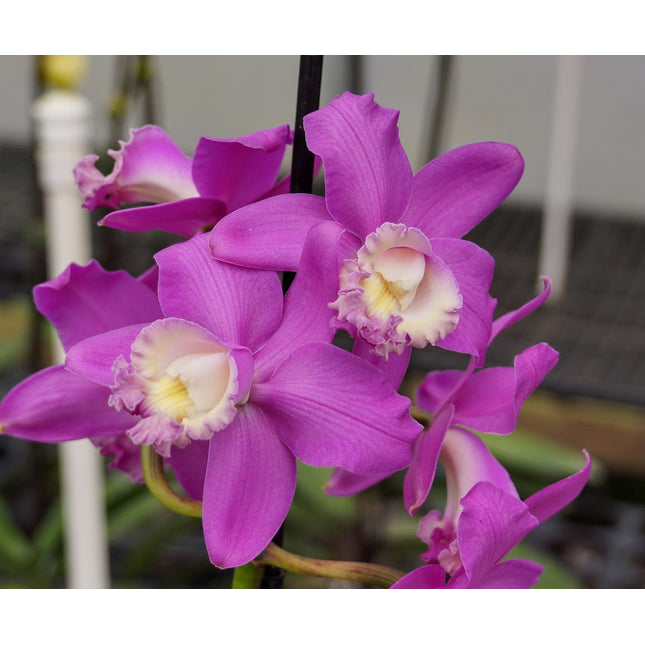
Well-established near blooming size (1-2 years), 3+ pseudobulb seedling with at least one new growth since repotting (for a total of at least 3 pseudobulbs). We selfed our best Cattleya harrisoniana so you can have one too! These have been vigorous, fast-growing seedlings. Plant in 3.25" pot.
Cattleya harrisoniana produces 4-6 (per spike) beautiful, shiny, very dark pink/light purple flowers that measure 5"-6" across. The lip is slightly lighter with a ruffled margin.
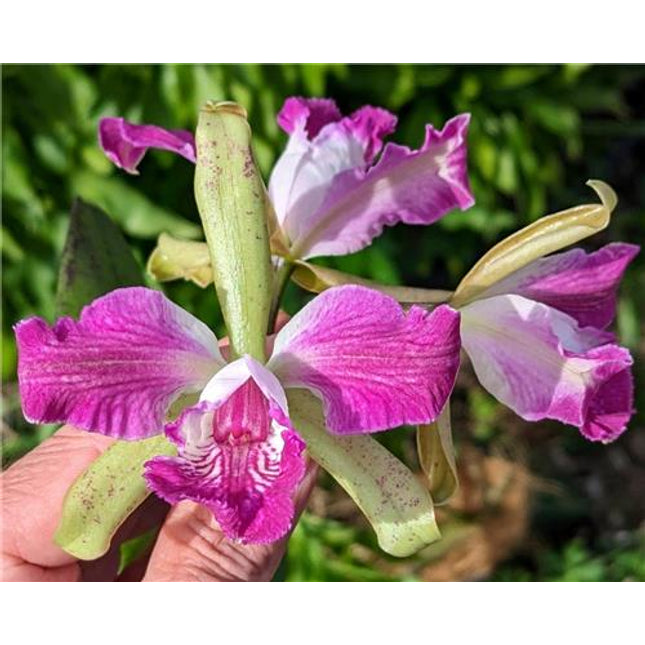
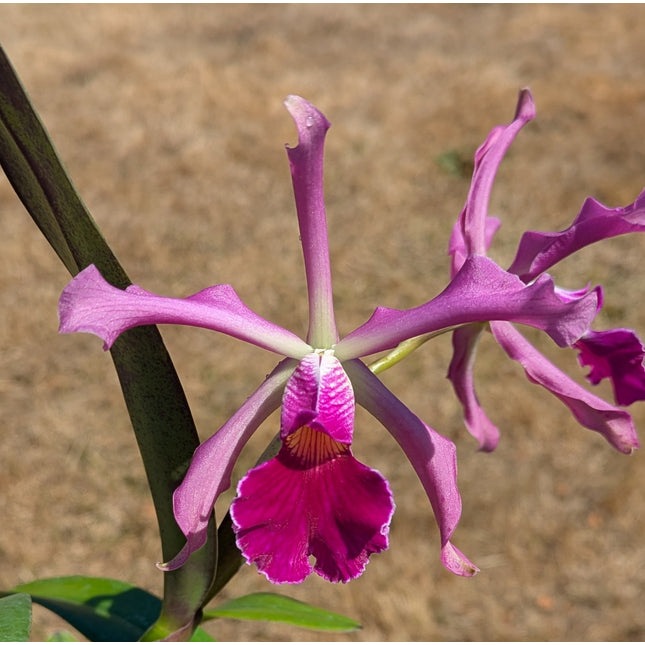
The flower picture is the parent plant, and the flowers on these babies should be nearly identical.
Care: Intermediate-warm temps and bright indirect light. Regular watering and fertilizer spring-fall and a slightly drier, fertilizer-free winter rest period.
Well-established near blooming size (1-2 years), 3+ pseudobulb seedling with at least one new growth since repotting (for a total of at least 3 pseudobulbs). These have been vigorous, fast-growing seedlings, and we are looking forward to seeing the results of this unique cross!
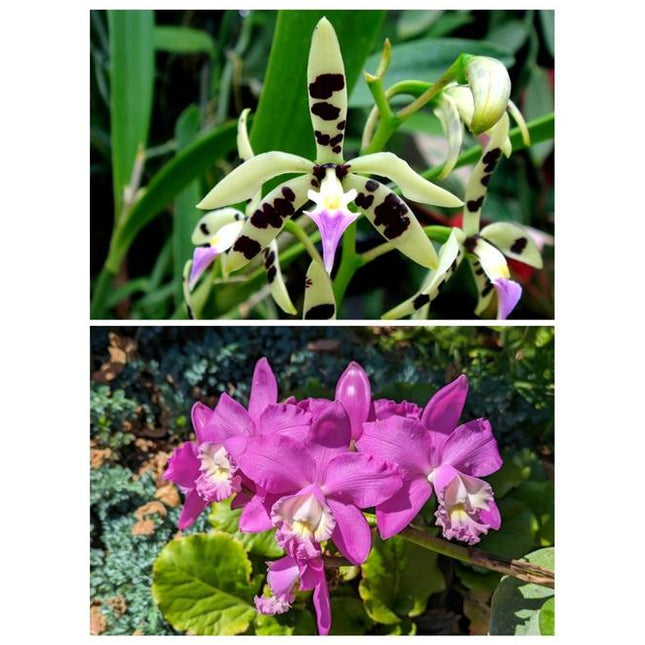
We crossed our best Cattleya harrisoniana with our best Panarica (used to be Encyclia) prismatocarpa. Our intention was to get C. harrisoniana size flowers that are spotted. What we actually get, who knows! If you are willing to take a chance and wait a while, you may get an amazing plant for a great price!
Care: Intermediate-warm temps and bright indirect light. Regular watering and fertilizer spring-fall and a slightly drier, fertilizer-free winter rest period.
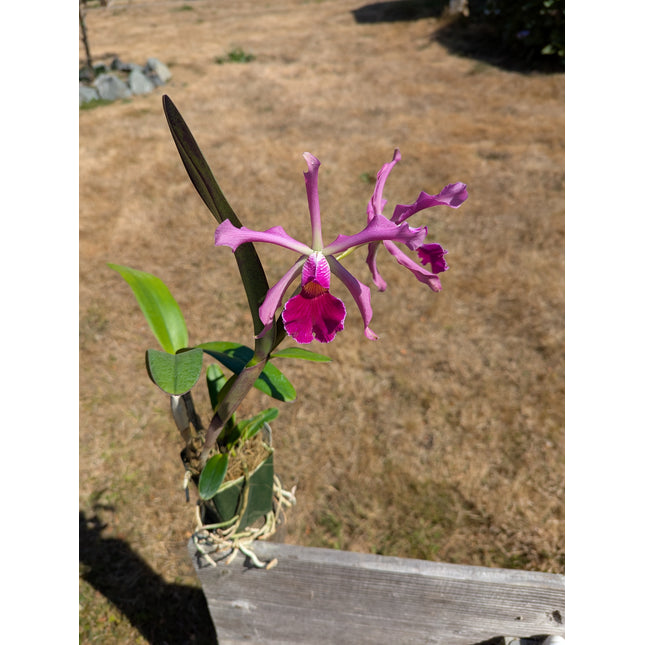
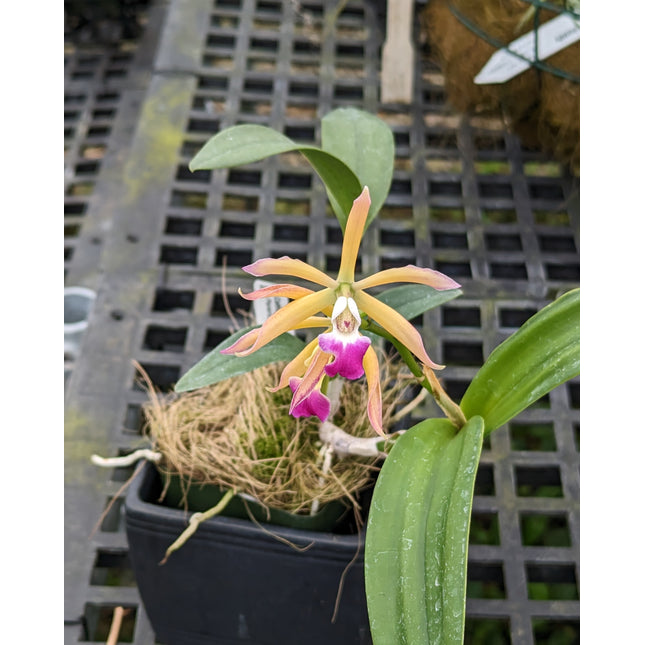
The flower pictures are the parents of this cross. The plant picture is representative of the size plant buyer will receive.
Blooming-size seedlings in 3.25" pots.
2024 is their first year blooming and the blooms have all been beautiful and interesting! As with all seed-grown hybrids, there is variation from flower to flower. Picture shown may not be representative of the flowers on the purchased plant.
Care: Bright indirect light, cool-warm temps, regular watering and fertilizer spring-fall and let dry between light waterings in the winter.
Well-established blooming size plant in 3.25" pot.
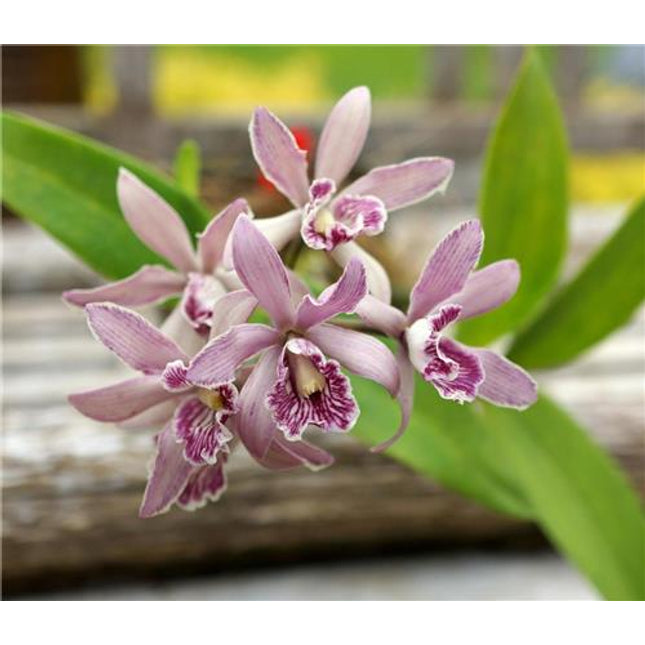
These vigorous, fast-growing hybrids have produced really lovely flowers! Each flower spike produces 2-4, 3" flowers that look almost identical to E. brassavolae except they are bluish-purple. Flowers late summer. Because these plants were raised from seeds and are not mericloned, the flowers will vary from plant to plant.
Our hybrids are created from superior plants that we have acquired over the years. We breed for vigor, quality, and size.
Care: bright-very bright indirect light, intermediate-warm temps, regular watering and feeding spring-fall. A rest period in the winter is advisable with less water and no food.