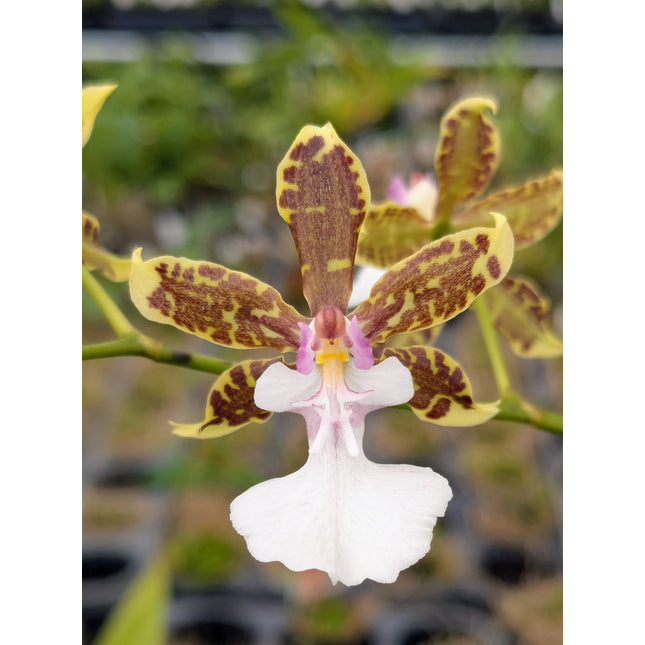
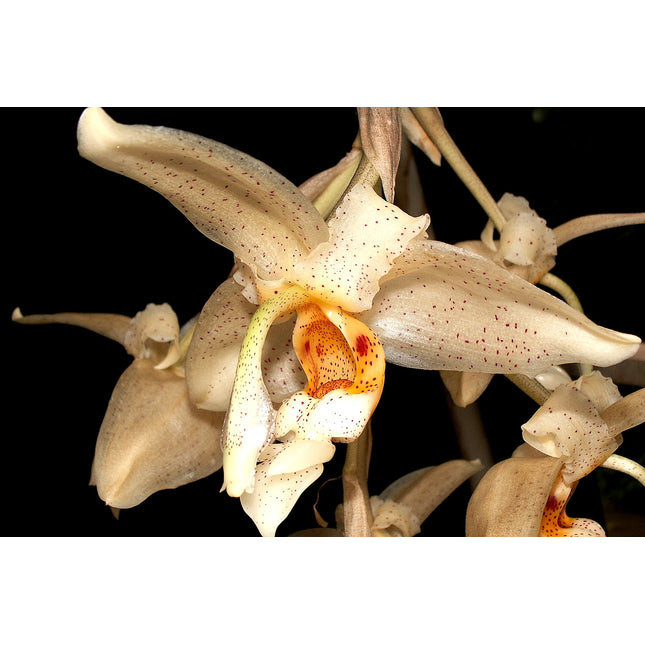
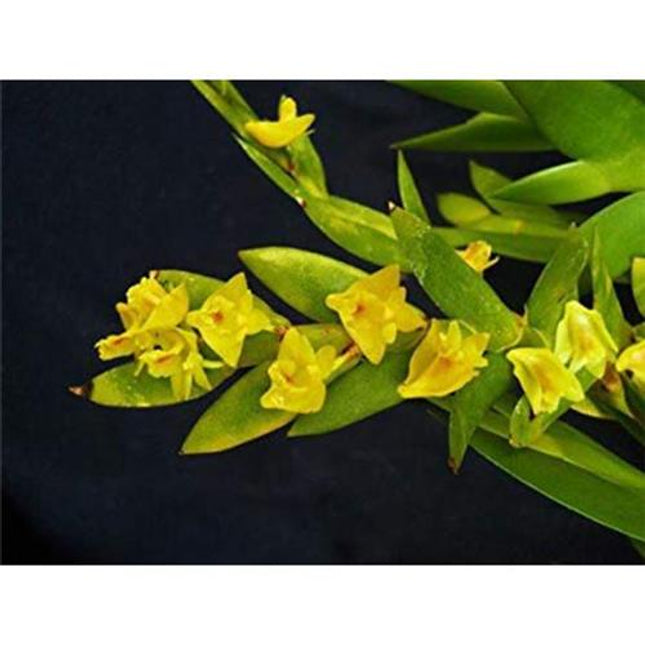
We've done the chore of deflasking, all you have to do is pot them up! Well-established seedlings. This is a complete flask (30+ plants) that was compotted in the March 2025.
Great for retailers or orchid societies! Oncidium leuchochilum has waxy, long-lasting flowers and is spicely fragrant.
Care: cool-intermediate growing, indirect light, regular watering and fertilizer spring-fall and let it dry out between waterings in the winter.
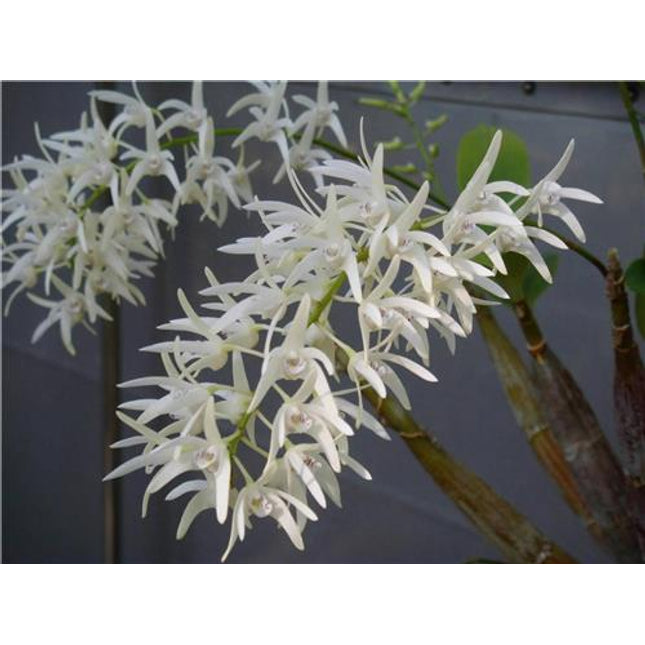
We've done the chore of deflasking, all you have to do is pot them up! Well-established seedlings. This is a complete flask (30+ plants) that was compotted in the March 2025.
Great for retailers or orchid societies!
Care: Cool-warm temps. Regular year-round watering and light feeding with a little more drying out between waterings in the winter. Bright indirect light.
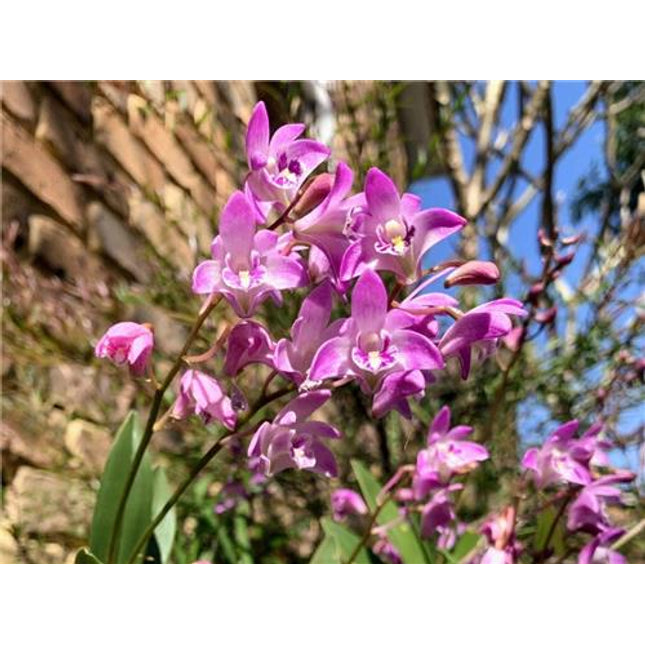
We've done the chore of deflasking, all you have to do is pot them up! Well-established seedlings. This is a complete flask (30+ plants) that was compotted in the March 2025.
Great for retailers or orchid societies!
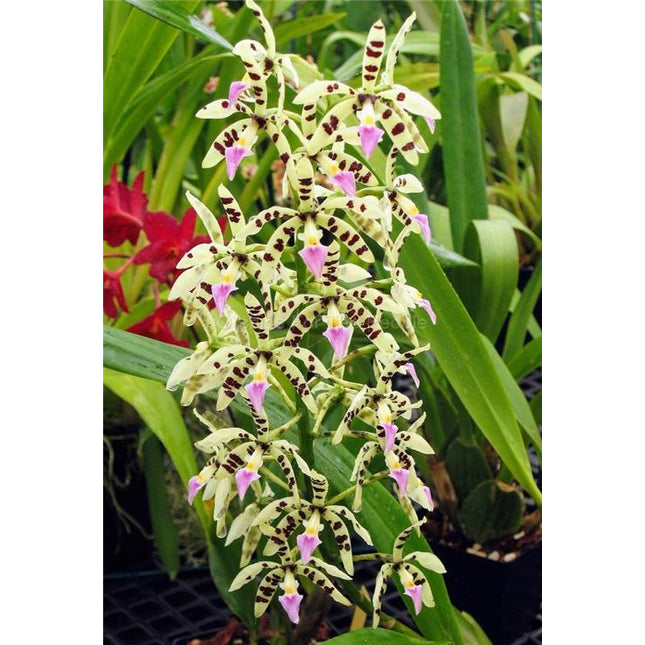
We think this is one of the most beautiful flowers in the Encyclia "alliance". Flowers are a little over 2" across. Lightly fragrant. This species blooms spring through early fall, whenever new pseudobulbs mature.
Care: Intermediate-warm temps and bright indirect light. Regular watering and fertilizer spring-fall and dry periods and between light waterings with no fertilizer in the winter.
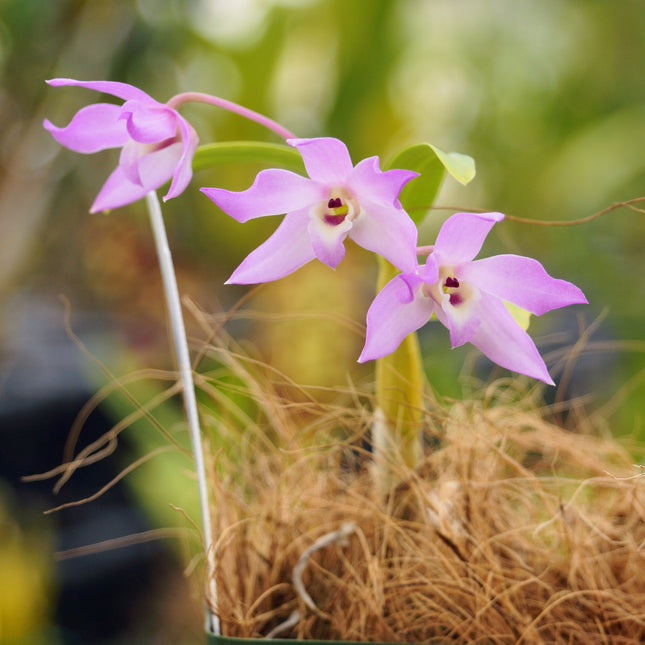
We've done the chore of deflasking, all you have to do is pot them up! Well-established seedlings. This is a complete flask (30+ plants) that was compotted in the March 2025.
Great for retailers or orchid societies!
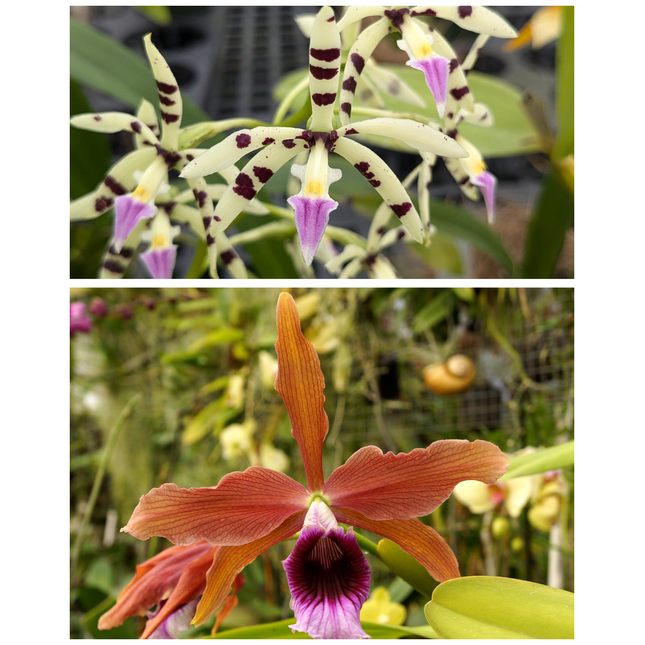
We've seen 2 sets of blooms so far from previous flasks grown out from the same seed pod. Some variation in the flower color (first 2 sets of blooms pictured).
Care: Cool-intermediate temps and bright indirect light. Regular watering and light feeding year-round, with a short dry period in between waterings.
We've done the chore of deflasking, all you have to do is pot them up! Well-established seedlings. This is a complete flask (30+ plants) that was compotted in the March 2025.
Great for retailers or orchid societies!
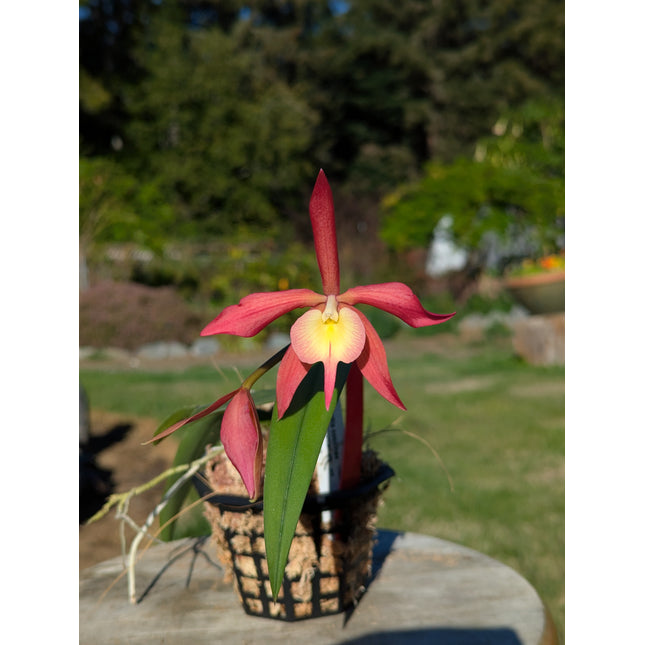
Care: Cool-warm temps, bright indirect light, regular watering spring-fall with a dry rest period in the winter.
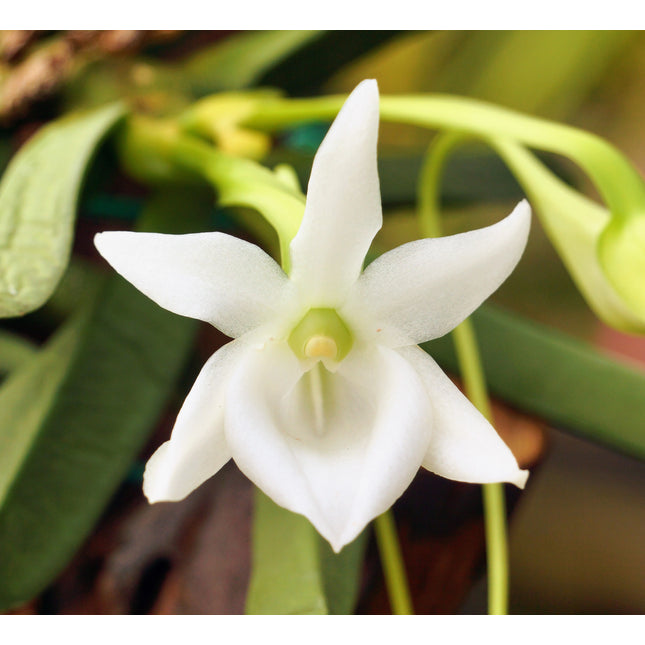
We've done the chore of deflasking, all you have to do is pot them up! Well-established seedlings. This is a complete flask (30+ plants) that was compotted in the March 2025.
Great for retailers or orchid societies!
Angraecum compactum flowers are fragrant--spicy to citrusy smelling!Care: Prefers cool-warm temps and bright indirect light. Water promptly once the media has dried.
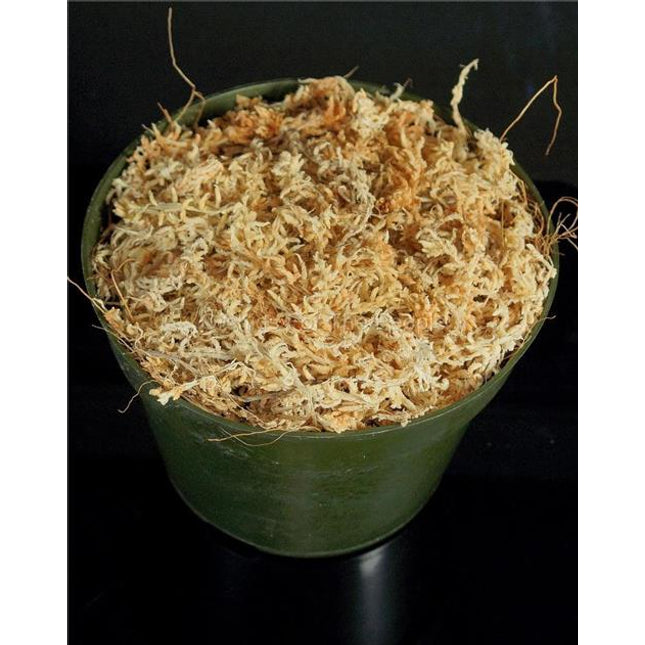
The hardest part of growing orchids is deflasking and establishing babies. Here at Orchids For The People we deflasked over 5,000 orchids last year.This kit is everything you need to deflask 1 flask of orchid seedlings just the way we do!From years of trial and error, we have developed this method that has improved survivability of seedlings to over 85% in the winter and over 92% spring-fall!Orchid flasks are not cheap and who wants to risk killing even 1 potentially unique, award-quality plant? This kit is a great investment for the health of your new babies!
Kit includes:1. Pot2. Coco fiber3. 4-star grade New Zealand sphagnum moss4. Daconil fungicide5. Proprietary blend of mycorrhizal fungi that helps protect the plants and stimulate root growth right out of the flask6. Fertilizer7. Most importantly a clear step by step direction sheet on how we deflask.
Well-established size plant in a 3.25" pot. One of our in-house hybrids! We have been impressed with this cross's vigor and ability to flower at a very young age. Because of the plant's height, it ships at the "2 plant" rate.
These plants will stay compact and relatively small (we expect them to max out at about a foot tall). Produces 1-3 1" pink flowers at each node on leafless, mature canes. The older, leafless canes produce flowers for several years so the show just keeps getting better! This plant does well mounted, in hanging baskets or in a pot.
Care: cool-hot (doesn't mind slightly cooler temps in the winter), bright indirect light, wet spring-fall with regular feeding, and a drier winter rest period.
Well-established, blooming-size plants in 3.25” pots. Dendrobium anceps is an interesting epiphytic species native to Southeast Asia, including regions like Thailand, Laos, and Myanmar.The leaves are generally lance-shaped to narrowly elliptic and are somewhat fleshy. They typically have a smooth, shiny surface and a dark green color. The leaves are arranged alternately along the stem. Overall, the leaves contribute to the plant's interesting appearance even when it isn’t in bloom. 3/4` to 1` flowers are pale greenish yellow with a red spotted lip; blooms successively winter-spring.
Care: Bright indirect light, regular watering and light feeding spring-fall and benefits from a period of cooler temperatures and reduced watering in the winter months to mimic its natural seasonal variations.
Well-established, blooming-size plant in a 3.25" pot.If you like Dendrobiums, particularly Australian Dendrobiums, you have to have this plant! Flowers are almost identical to D speciosum in color, shape, fragrance, and size but the plant is much more compact. Plus, it is a much more reliable bloomer!Care: Bright indirect light, warm summers and cool winters, plenty of water and regular feeding spring-summer with a drier rest period in the winter.
Well-established blooming size plant in a 3.25" pot.This is one of the first orchids I grew as a kid in southern CA and is still one of the hardiest and most forgiving orchids you can grow! D kingianum stays very compact and is happy pretty much anywhere that receives moderately bright light.This species flowers late winter/early spring and produces an abundance of fragrant, long-lasting, dime-sized purple and white flowers.If you want to try your hand at orchids, start here!Care: Bright indirect light, moist and warm-hot in the summer, cool and drier in the winter. Light, regular fertilizing spring-late summer
Near blooming size seedling (12-18 months) in a 4" basket.
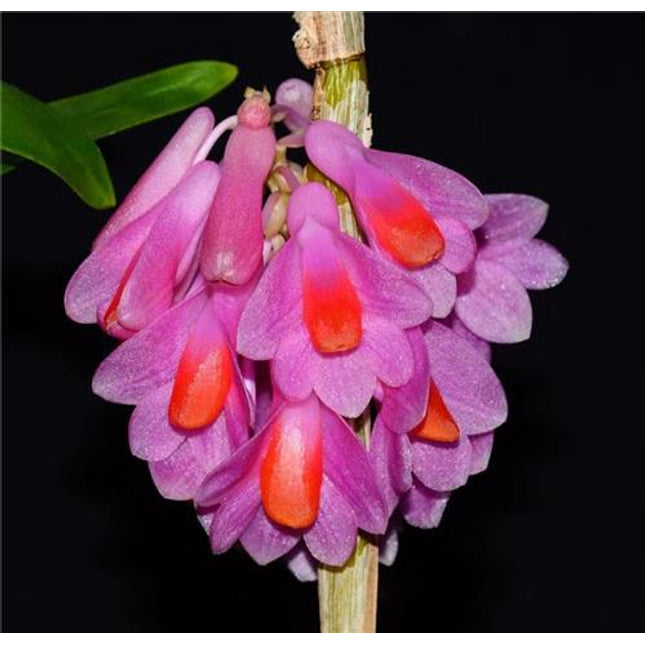
This robust and easy-to-grow Dendrobium is a beauty when in bloom! The fragrant flowers develop in clusters along the mature, leafless stems (which can reach 2-3 feet in length). The flowers have pink petals and sepals with an orange-red lip. This species flowers randomly throughout the year. Flowers last 2-5 weeks. Sweetly fragrant flowers!
Care: This orchid prefers intermediate to warm temperatures, bright indirect light, and good air circulation. Watering and light feeding year-round, but allow the pot to dry out slightly between waterings.