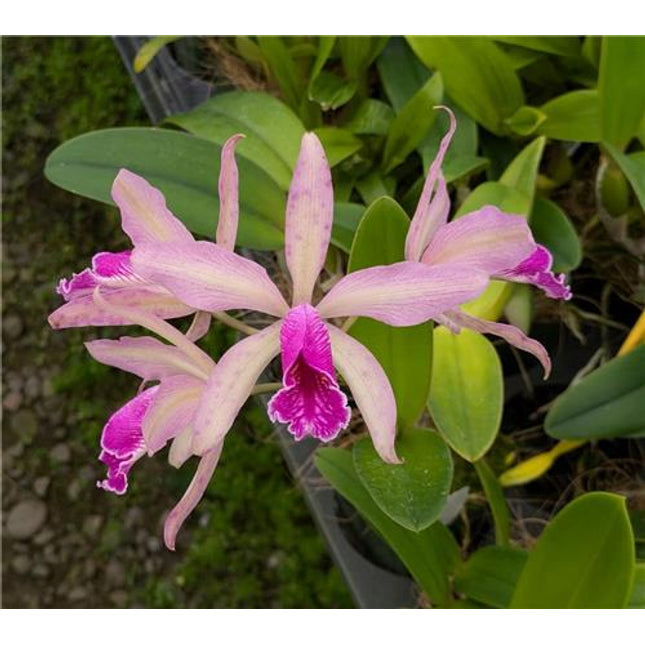
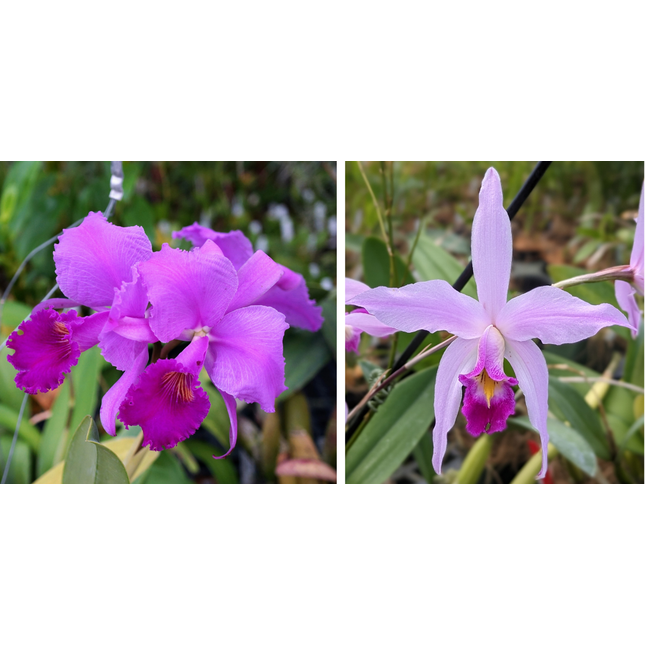
Cattleya Mariae Piae (Cattleya forbesii x C purpurata). Blooming-size plant in a 3.25" pot.All plants available have previously bloomed and currently have at least 1 new growth developingThis hybrid was first registered in 1897 and we liked it so much we brought it back! Using our finest parent plants, this is the result. The beautiful white petals have delicate pink veins and the large, rolled lip starts out white and turns purple with a white margin.
Care: bright indirect light, intermediate-warm temps, regular watering and light feeding spring-fall, and a slightly drier rest period in the winter.
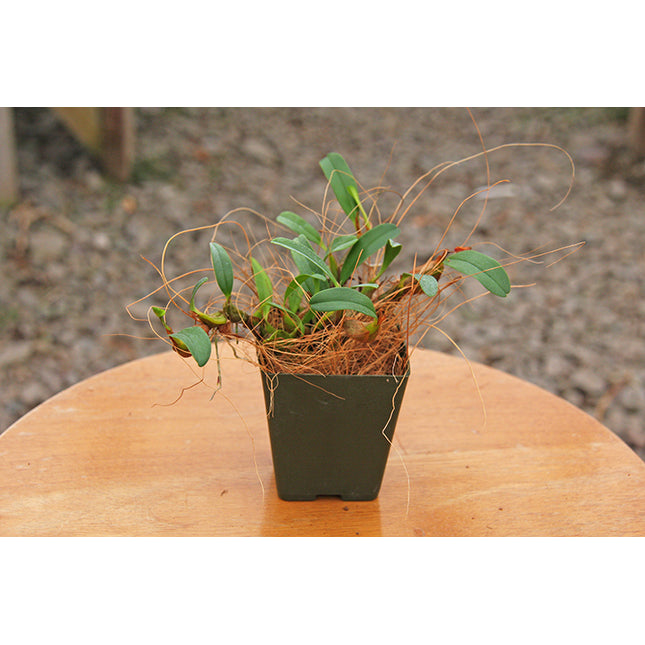
1 lb of Long coconut husk fiber. Great for many plant uses, particularly with orchids. $6 discount when you purchase 3 lbs (Select the 3 lb option, not 3 of the 1 lb option)! Contact us to buy by the bale (~75 lbs for $350 plus shipping).
Here at the Orchids For The People nursery, this is our go-to potting medium! 95+% of our plants now live in just coconut fiber! It’s easy to use. When using it as a potting medium just fluff it up, pillow (don’t wrap) it around the roots, and stuff the whole “unit” into a pot with really good drainage. We recommend terra cotta pots or “Waterdance” pots, which we also sell. The “unit” should be very snug in the pot.
What we love about coco fiber:
Slow to break down. Will easily last 2 years, the maximum recommended time between repottings.
Very lightweight (easy on the back and the tables).
Holds moisture while allowing great air circulation when used with the appropriate pot (lots of drain holes) or basket.
Roots and flower spikes penetrate easily. You never have to worry about whether or not your Stanhopea or Dracula flower spike is going to make it out of the basket!
We also use it to wrap plants before mounting them. This protects fragile roots during the process and creates a small, more damp microclimate allowing the plant to acclimate quicker with less stress. Plus, it helps hide the wire or string used to affix the plant to the mount.
We also use it to "top dress” pots when using other potting mediums. This prevents weed growth, slows water loss, soil erosion due to overhead watering, and moss and algae from accumulating on top of certain mediums such as sphagnum moss.
Large, well-established blooming size division in a 3.25" pot.
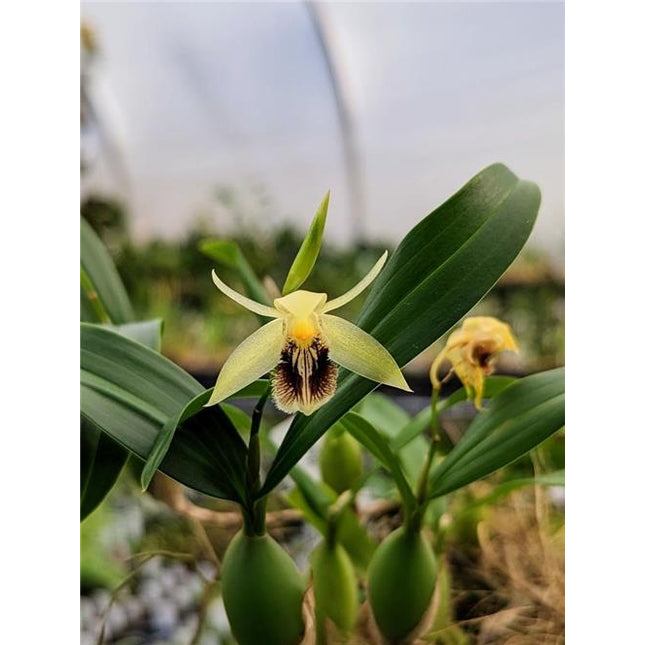
Flower spikes develop in the fall-winter and carry 1-3 silver quarter-sized creamy yellow flowers. The lip is very dark brick-red and is hairy.
Care: Cool-warm temps, shade-indirect light and regular year-round watering and light feeding.
Well-established blooming size plant in a 3.25" pot.
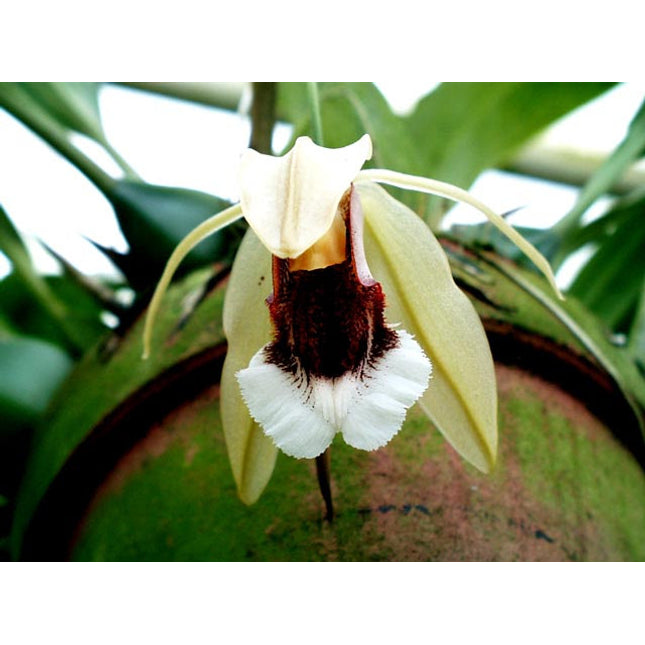
Known as the Beautiful Coelogyne, this species blooms sequentially with 1 to 3 flowers per spike. The musky scented flowers arise out of the center of a new pseudobulb growth and can bloom at any time of the year but most often in spring and summer. The flowers are about 6 cm in diameter. The lip is white with orange-brown or dark brown spots. The large side lobes of the lip are brown or red and curve up to form a tube that almost completely covers the spine.
Care: Cool to hot temps, indirect-bright indirect light, regular year-round watering and light feeding. The warmer the growing conditions, the more often it should be watered.
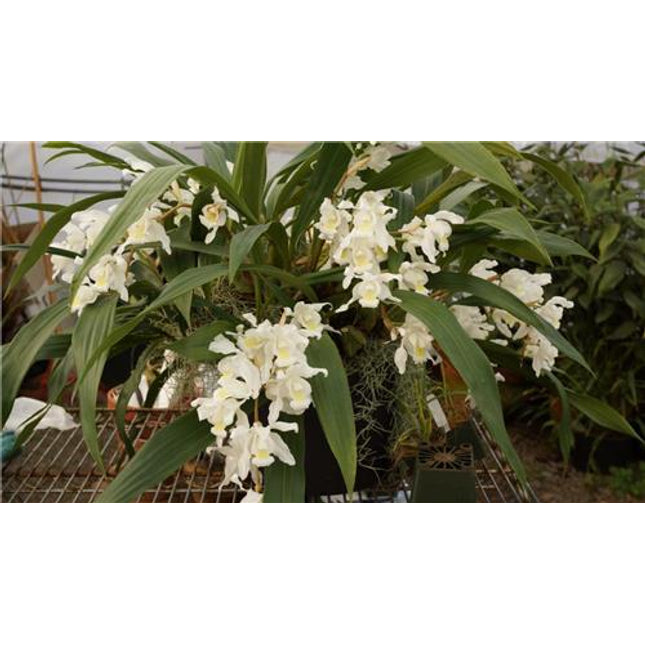
Coelogyne Unchained Melody (C cristata x C flaccida). Well-established blooming size plant in a 3.25" pot, with at least one new growth.Long-lasting crystalline white flowers (3" across) have a nice contrasting light yellow throat. Spikes will have up to 15 or so flowers on large plants. Very fragrant with a scent similar to narcissus.This plant is a fast grower, with each bulb producing 2 or 3 new bulbs. Flowers in the late winter and early fall.
We've done the chore of deflasking, all you have to do is pot them up! Well-established seedlings. This is a complete flask (30+ plants) that was compotted in the March 2025.
Great for retailers or orchid societies!
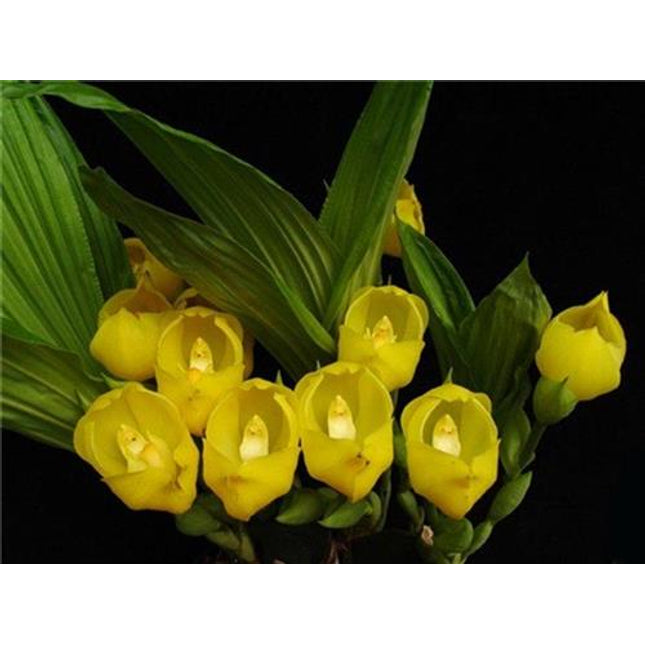
Anguloa dubia orchid is famous for its fragrant, tulip-like flowers (akin to wintergreen and Campho Phenique). This deciduous species produces new growths spring-fall. 2 or more flowers emerge from the base of each new growth. Flowers last 6-8 weeks.Care: Regular watering and light feeding spring-fall with a dry winter rest. Bright indirect light and cool-warm temps.
We've done the chore of deflasking, all you have to do is pot them up! Well-established seedlings. This is a complete flask (30+ plants) that was compotted in the March 2025.
Great for retailers or orchid societies!
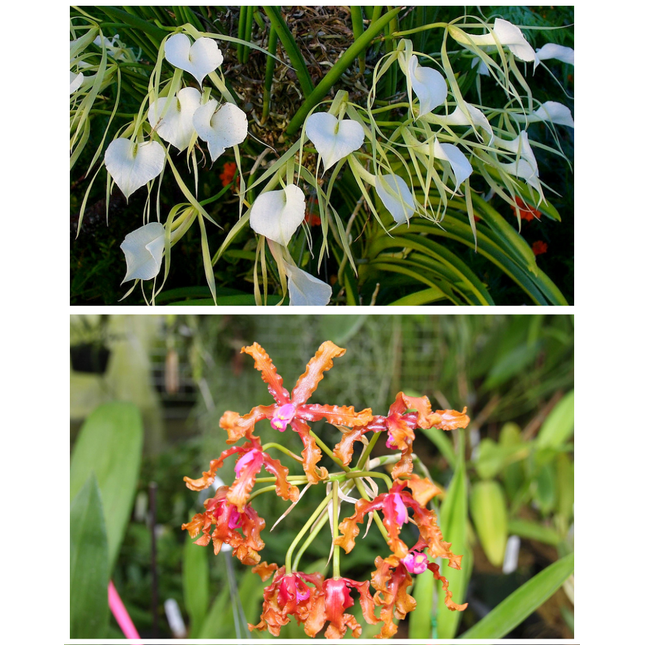
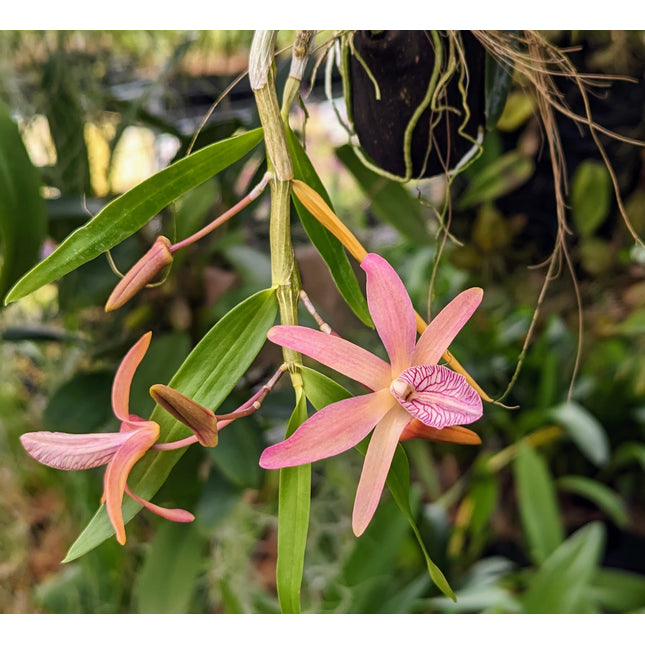
A new in-house hybrid! Parent plants are pictured. Our first time with this cross. Looking forward to seeing the hybrid flowers--It's an adventure!
Care: Bright indirect light, intermediate-warm temps, regular watering and light feeding spring-fall with a drier rest period in the winter.
We've done the chore of deflasking, all you have to do is pot them up! Well-established seedlings. This is a complete flask (30+ plants) that was compotted in the March 2025.
Great for retailers or orchid societies!
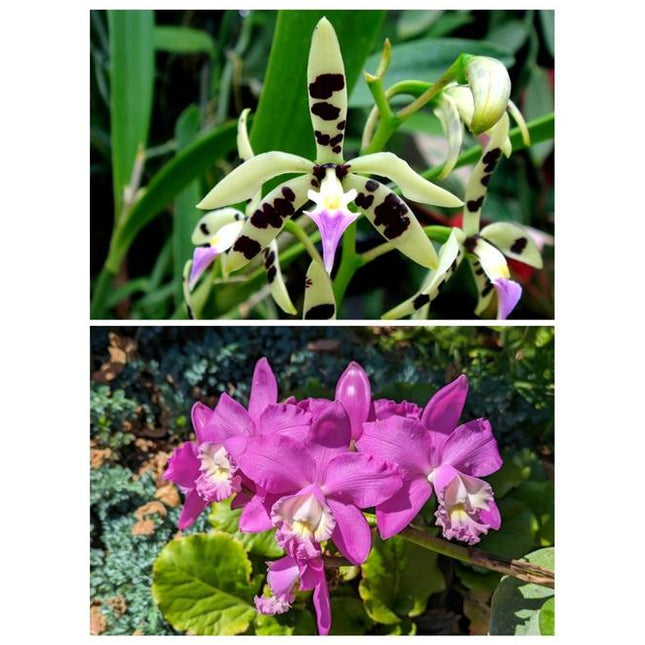
We crossed our best Cattleya harrisoniana with our best Panarica (used to be Encyclia) prismatocarpa. Our intention was to get C. harrisoniana size flowers that are spotted. What we actually get, who knows! If you are willing to take a chance and wait a while, you may get an amazing plant for a great price!
Care: Care: Intermediate-warm temps and bright indirect light. Regular watering and fertilizer spring-fall and a slightly drier, fertilizer-free winter rest period.
We've done the chore of deflasking, all you have to do is pot them up! Well-established seedlings. This is a complete flask (30+ plants) that was compotted in the March 2025.
Great for retailers or orchid societies!
Parent flowers pictured.
Care: Bright indirect light, cool-warm temps (can be grown cooler than cattleya), regular watering and light feeding spring-fall with a moderately dry rest period in the winter.
We've done the chore of deflasking, all you have to do is pot them up! Well-established seedlings. This is a complete flask (30+ plants) that was compotted in the March 2025.
Great for retailers or orchid societies!
With this cross we are looking mainly for hybrid vigor. The offspring will look very similar to both parents with some slight variations in color. Parent flowers are 3-4" inches across, flower sequentially (2-5 flowers/spike), and are pendant (adult plants do best in hanging baskets).Care: cool-warm temps, shade-indirect light, regular year-round watering and light feeding.
We've done the chore of deflasking, all you have to do is pot them up! Well-established seedlings. This is a complete flask (30+ plants) that was compotted in the March 2025.
Great for retailers or orchid societies!
We have bloomed out a few flasks from this seed pod. Gorgeous, consistent flowers, slightly fragrant.Care: Bright indirect light year-round. Regular watering and light feeding, and intermediate-warm temps spring-fall and a cool, drier rest period in the winter.
We've done the chore of deflasking, all you have to do is pot them up! Well-established seedlings. This is a complete flask (15-20 plants) that was compotted in the March 2025.
Great for retailers or orchid societies!
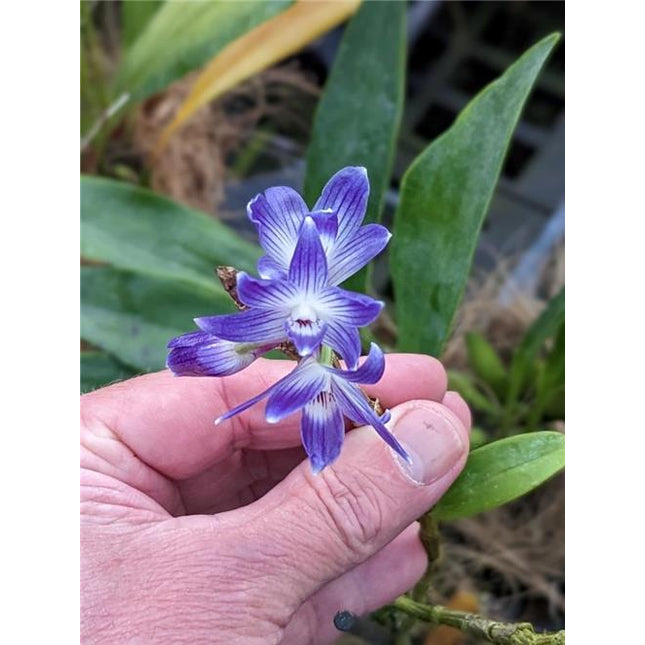
Den victoriae-reginae is known for its beautiful violet-blue flowers. It tends to produce darker (more blue) flowers in cooler temps. Blue color flowers are very rare among orchids.
Den victoriae-reginae blooms most often in the spring-summer but can bloom anytime.
Care: Cool-warm temps. Regular year-round watering and light feeding with a little more drying out between waterings in the winter. Bright indirect light.